
Scenario-Based Action Camera Selection: X20, Q1, Q2 & Q3
Scenario-Based Action Camera Selection: X20, Q1, Q2 & Q3
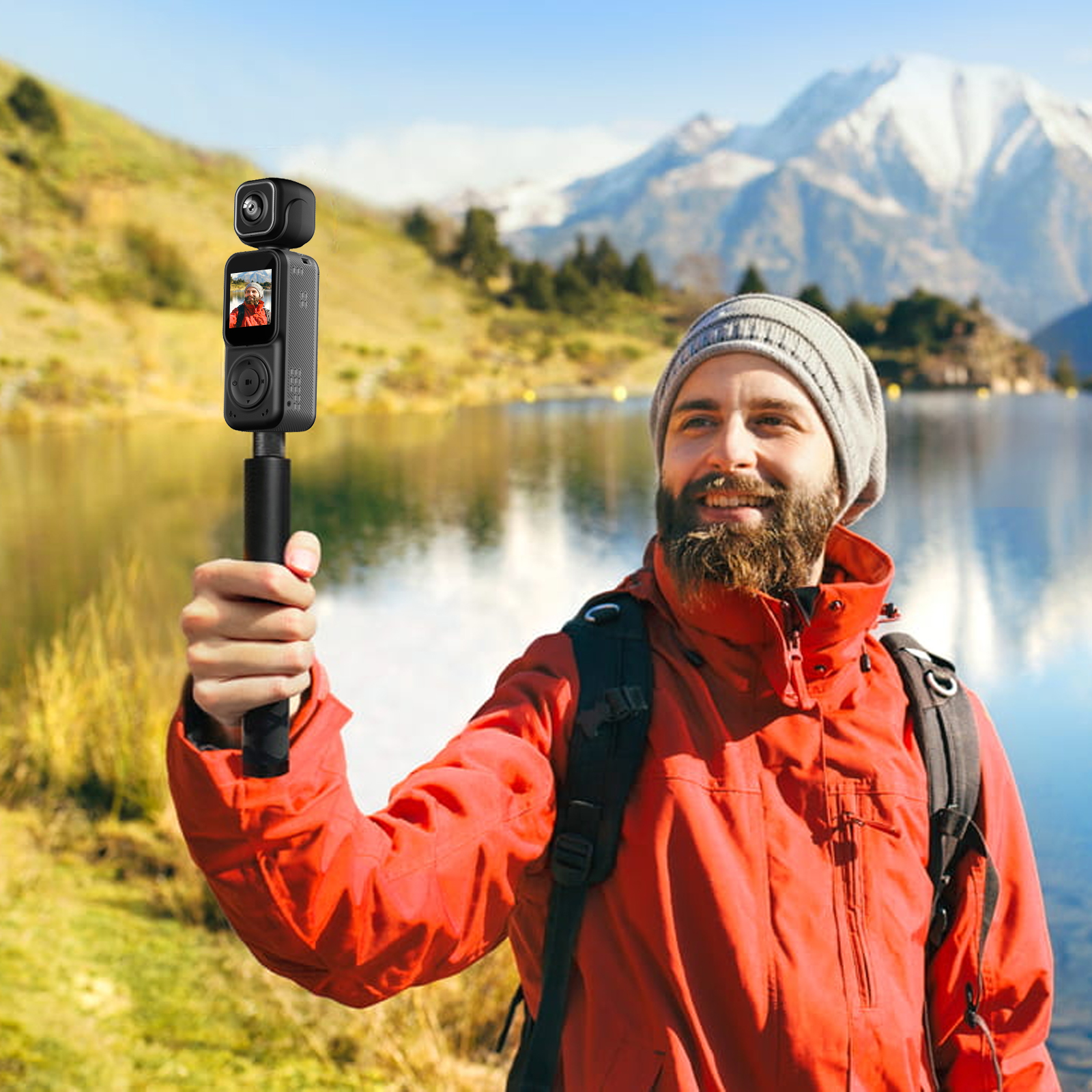
Action camera projects rarely fail because the headline resolution is too low. They fail because the camera, mount, housing, recording mode and power plan do not match the scene. This guide maps the YUAOHENG Action Camera X20, Q1, Q2 and Q3 to three intended industry scenarios: driving and transportation, outdoor sports, and photography and video shooting. It uses the supplied product, application, capability and verified compliance data, and it separates listed features from performance that still requires acceptance testing.
YUAOHENG Action Camera is the action-camera line of Dongguan YUAOHENG Electronic Technology Co., Ltd., a Dongguan-based manufacturer of action cameras, dash cameras and smart video doorbells. The models in this guide are positioned differently: the X20 is presented for basic project needs, while the Q1, Q2 and Q3 introduce 4K recording, dual-lens recording, rotating lens direction, touch control and 6-level electronic image stabilization in different combinations. The purchasing question is not which model sounds most advanced. It is which model satisfies the shot list, mounting method, light conditions, water exposure and acceptance plan without adding unverified assumptions.
Why Scenario Fit Beats a Resolution-First Shortlist
A resolution-first shortlist usually starts with 4K and stops there. That is a weak procurement method for action and sports cameras because the same 4K label can sit behind different recording architectures, stabilization provisions, screens, batteries and housing options. A bicycle-mounted camera needs vibration control. A driving project needs a stable mount, dual-angle coverage or night-time usability. A vlog or video-shooting project may value a rotating lens, a touch screen, dual recording or a larger display more than a higher frame rate. An underwater or surfing project needs a verified housing and depth specification, not a generic waterproof phrase.
The supplied application data describes outdoor all-weather use across -20°C to 60°C, with dustproof, waterproof and shockproof requirements, high-vibration riding, low-light night use and high-speed movement. Those are deployment conditions to verify. They are not blanket ratings for every model in this guide. The same distinction applies to IP ratings. A product can list waterproof-case compatibility without carrying an IP68 rating, and a housing can be rated for a different depth than the camera body. Buyers should keep those facts separate in the specification sheet and acceptance plan.
What the Market Mix Suggests, and What It Does Not
Market context helps explain why scenario matching matters, but it does not prove that one model is suitable for a specific project. Fortune Business Insights reported that outdoor sports and recreation applications, including cycling, skiing, surfing and diving, accounted for a 46% share of the global action camera market in 2025. Global Market Insights reported that 4K and above resolution cameras held a 49.50% share of total market revenue in 2025. These figures describe market mix. They do not establish the field performance, waterproof depth, stabilization quality or battery runtime of the X20, Q1, Q2 or Q3.
For a procurement team, the useful conclusion is narrower: outdoor and 4K-oriented demand is large enough that model selection should be argued from use conditions, not from a single headline specification. The four models in this guide cover different points on that decision path. The table below condenses the supplied specification facts before the scenario sections explain what those facts mean for the buyer.
The Four Models at a Glance
| Model | Listed product designation | Display | Lens and recording | Stabilization and night vision | Battery and housing notes |
|---|---|---|---|---|---|
| X20 | 2K+WiFi | 1.54-inch IPS, 320×240 | 130° HD lens with rotating direction; camera resolution field lists AVI 1920×1080 | No EIS listed; infrared night vision supported with four IR lights and manual switching | 1000mAh/3.8V polymer battery; about 6–7 hours video working time; waterproof-case compatibility not listed |
| Q1 | 4K+WiFi | 1.5-inch IPS, 320×240 | 130° HD lens with rotating direction; front 4K and rear 4K; simultaneous 2K+2K dual recording | No EIS listed; infrared night vision supported | 2000mAh/3.8V polymer battery; about 4–5 hours video working time; waterproof-case compatible |
| Q2 | 4K+WiFi+Touch screen+Anti-shake | 1.8-inch IPS, 800×480 | 25mm 130° wide-angle lens; front 4K and rear 4K; simultaneous 2K+2K dual recording with three modes | 6-level electronic image stabilization; infrared night vision supported; touch and physical dual buttons | 18650 2000mAh battery; about 4–5 hours video working time; waterproof-case compatible; rotating lens not listed |
| Q3 | 4K WiFi | 1.5-inch IPS, 320×240 | 130° HD lens with rotating direction; front 4K and rear 4K; simultaneous 2K+2K dual recording | No EIS listed; infrared night vision supported with manual switching | 2000mAh/3.8V polymer battery; runtime not stated in the supplied Q3 data; waterproof-case compatibility not listed |
Table notes: the X20 is listed under a 2K+WiFi product designation, while its specification field separately lists camera resolution as AVI 1920×1080. Confirm the exact recording mode to be accepted. Waterproof-case compatibility is a housing statement, not an IP68 rating or a depth rating.
Model-by-Model Fit
X20: Basic Project Coverage, Manual IR and Longer Listed Runtime
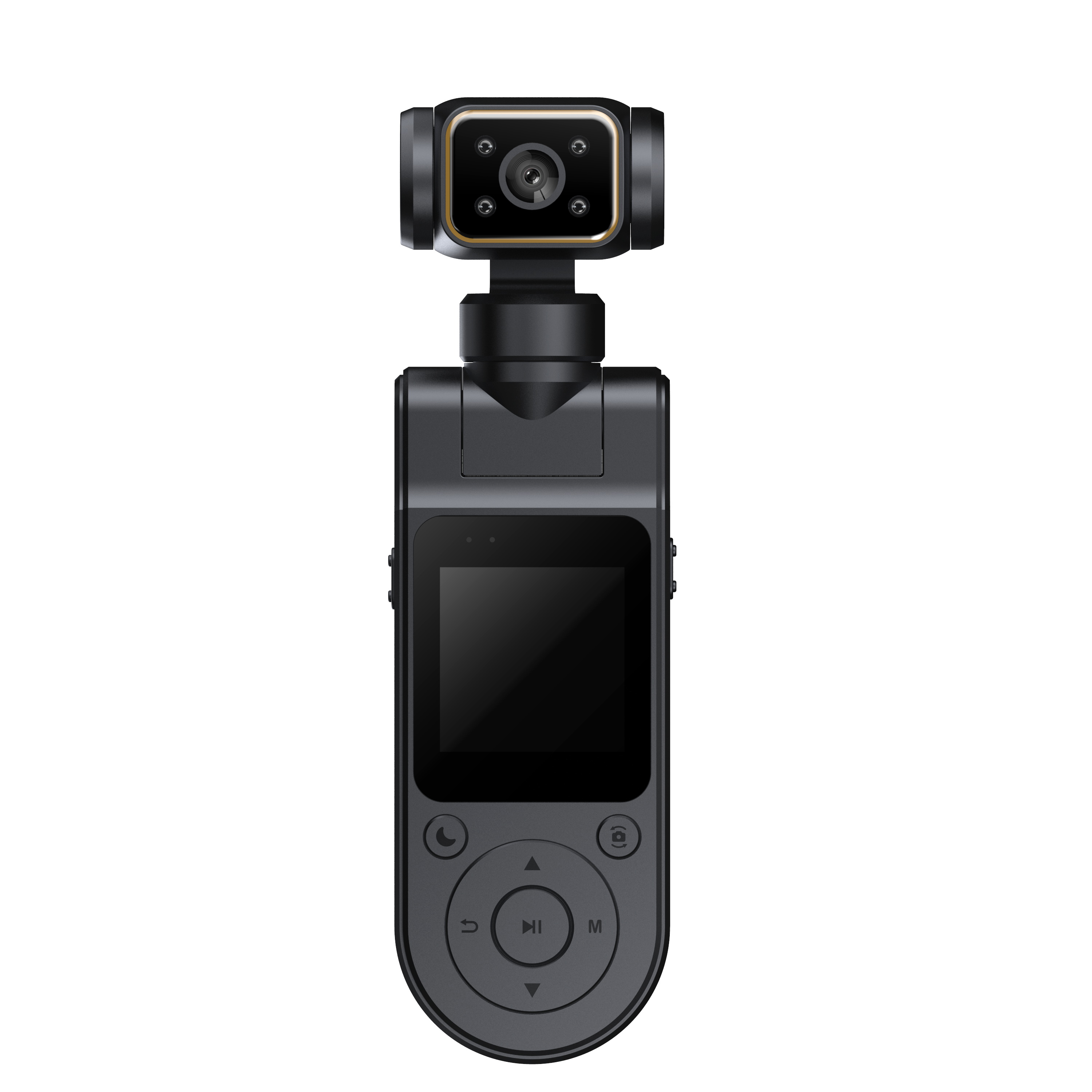
The X20 is positioned for basic project needs. Its supplied product type is 2K+WiFi, and its specification table lists a 1.54-inch IPS screen at 320×240, a 130° HD lens with rotating direction, infrared night vision with four built-in IR lights, manual infrared switching, a 1000mAh/3.8V polymer battery, and about 6–7 hours of video working time. The same data lists MicroSD support for 16GB, 32GB, 64GB and 128GB options, plus Micro-Type-C/DC5V-1A-2A input and a high-speed Mini USB 2.0 interface.
The X20 is the simplest fit for basic driving, travel and general recording where manual IR control and longer listed runtime matter more than stabilization or 4K dual recording. Its 1.54-inch screen is adequate for menu checks and framing, but it is smaller than the Q2 display. The 1000mAh battery is smaller than the 2000mAh batteries listed for Q1, Q2 and Q3, so power planning should be based on the actual recording mode and acceptance test, not only on the battery label. The product data does not list electronic image stabilization or waterproof-case compatibility for the X20. That makes it a weaker primary choice for high-vibration bicycle mounting or wet outdoor use unless the buyer adds a separately verified mount and housing solution.
Q1: 4K Dual Recording, Rotating Lens and Waterproof-Case Compatibility
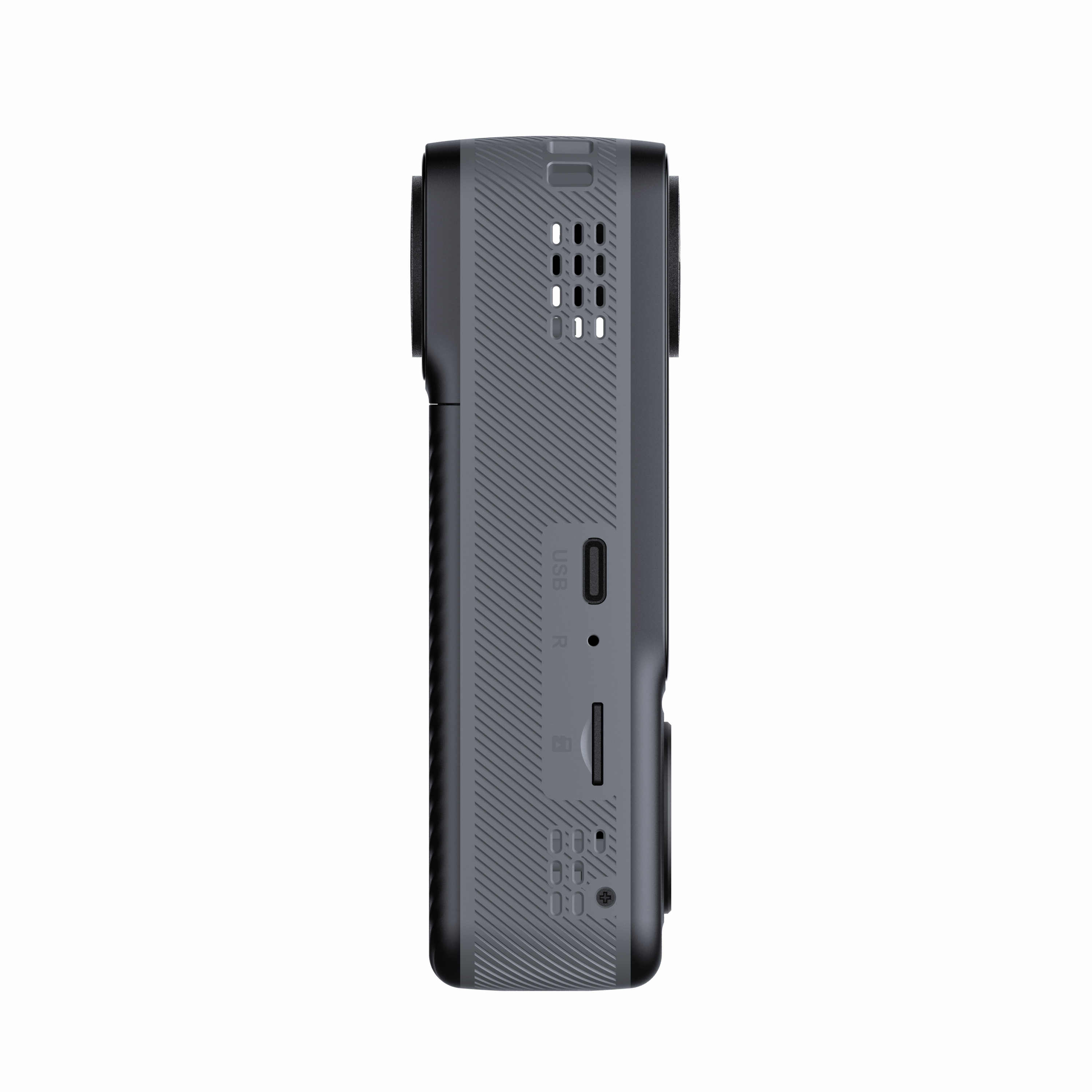
The Q1 is listed as a 4K+WiFi model with a 1.5-inch IPS screen at 320×240, a 130° HD lens with rotating direction, front 4K recording, rear 4K recording, and simultaneous 2K+2K dual recording. It uses a 2000mAh/3.8V polymer battery with about 4–5 hours of video working time. The supplied selling points list waterproof-case compatibility and infrared night vision support. The Q1 data does not list electronic image stabilization or touch-screen operation.
That combination points to photography and video shooting tasks where the camera can be mounted securely and the priority is 4K capture, dual-direction recording or a rotating lens for framing. The Q1 can also support driving and transportation projects that need front and rear 4K recording, but the absence of a listed EIS function means the mount and vehicle vibration path deserve more attention. For outdoor sports, the Q1 is a conditional choice: it can be used where vibration is controlled or where the shot does not depend on electronic stabilization, and its waterproof-case compatibility supports wet-environment planning only after the housing depth and test report are confirmed.
Q2: 6-Level EIS, Touch Control and the Strongest Outdoor-Sports Feature Set
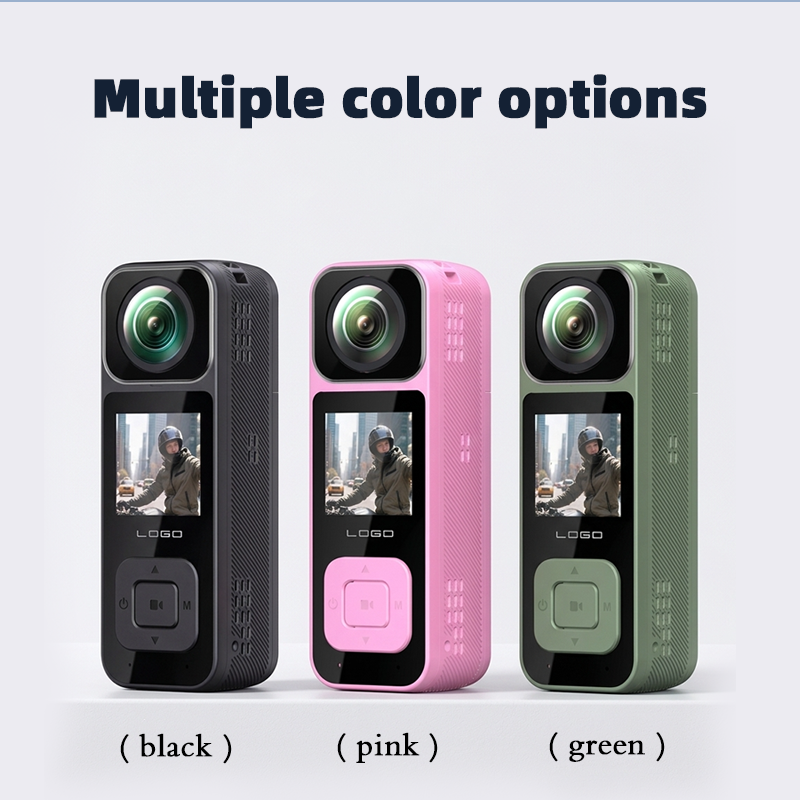
The Q2 is listed as a 4K+WiFi+Touch screen+Anti-shake model. It has a 1.8-inch IPS screen at 800×480, a 25mm 130° wide-angle lens, front 4K and rear 4K recording, simultaneous 2K+2K dual recording with three modes, 6-level electronic image stabilization, touch and physical dual buttons, infrared night vision support, and a waterproof-case-compatible selling point. It uses an 18650 2000mAh battery with about 4–5 hours of video working time. A rotating lens is not listed for the Q2.
For outdoor sports, the Q2 is the clearest primary fit in this set because stabilization, touch control and physical buttons all matter when the camera is mounted on a bicycle, helmet, chest harness or ski setup. The 1.8-inch 800×480 display is the highest listed screen resolution among the four models, and the dual-button arrangement gives the user an alternative to touch operation in cold or gloved conditions. The Q2 still requires a verified housing for surfing, diving or heavy water exposure. Its EIS specification is a listed feature, not an independent test result, so the acceptance plan should define the vibration profile, resolution, frame rate and pass/fail criteria used to judge stabilization.
Q3: Dual 4K and Manual IR for Fixed-Mount and Dual-Angle Work
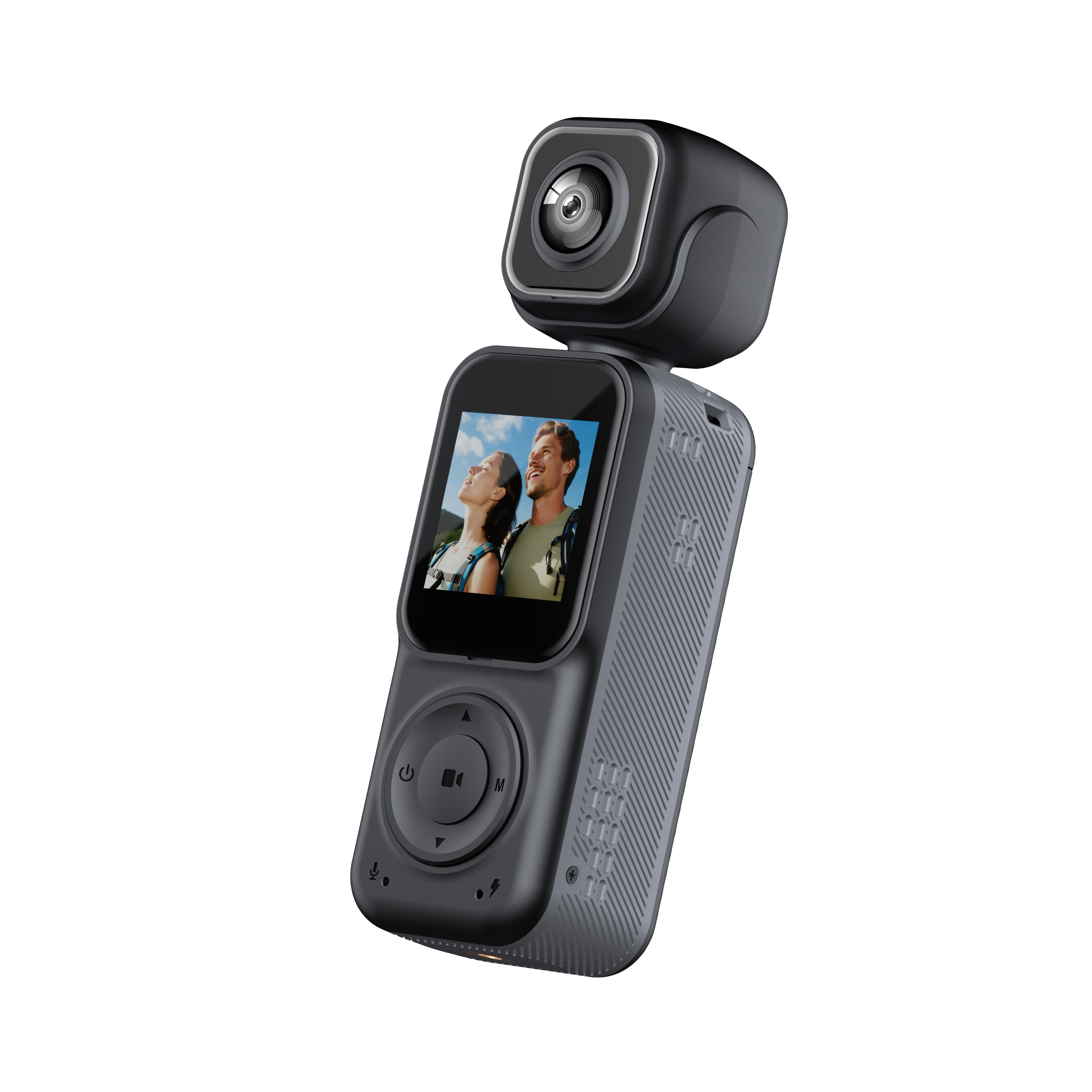
The Q3 is listed as a 4K WiFi model with a 1.5-inch IPS screen at 320×240, a 130° HD lens with rotating direction, front 4K recording, rear 4K recording, simultaneous 2K+2K dual recording, manual infrared switching, and a 2000mAh/3.8V polymer battery. The supplied Q3 data does not state a video working time, electronic image stabilization, touch-screen operation or waterproof-case compatibility.
The Q3 fits fixed-mount driving and transportation projects that need dual-direction 4K capture and manual IR control, and photography or video-shooting projects where the rotating lens and dual recording are useful but the camera can be held steady. It is not the primary choice for high-vibration sports or wet outdoor use in this set because EIS and housing compatibility are not listed. If the project requires either condition, the buyer should either move to a model with the listed feature or add a separately verified accessory solution and acceptance test.
Driving and Transportation: Fixed Mounts, Dual Angles and Manual IR
Driving and transportation use puts a premium on mounting stability, power continuity, night-time usability and a recording architecture that captures the required angle. The X20, Q1, Q2 and Q3 can all record video, but they do not serve the same driving sub-scenario.
For a basic cabin, travel or general vehicle-recording project, the X20 is the simplest starting point. Its manual infrared switching and four IR lights support night-time menu checks and near-field recording planning, and its listed 6–7 hours of video working time is the longest among the four models in the supplied data. The 1000mAh battery still needs a power plan for long shifts, and the absence of listed EIS means the mount should be rigid and isolated from the worst vibration paths. The X20 does not list waterproof-case compatibility, so external vehicle mounting in rain should not be assumed without a separate housing specification.
For dual-angle 4K recording on a fixed mount, the Q3 is the closer fit. It lists front 4K, rear 4K and simultaneous 2K+2K recording, plus manual IR switching and a 2000mAh battery. The rotating lens direction helps framing during installation. The trade-off is that Q3 does not list EIS, touch control or waterproof-case compatibility. A fixed vehicle mount reduces some vibration risk, but the acceptance plan should still include a road test at the intended resolution and frame rate.
The Q2 becomes relevant when vibration compensation and touch control are part of the driving requirement. Its 6-level EIS, 1.8-inch 800×480 display and dual-button operation are useful when the camera is mounted on a motorcycle, bicycle or vehicle bracket that transmits road vibration. The Q1 is the alternative when front and rear 4K recording are required and the installation can provide a stable mount; its waterproof-case compatibility may help with external mounting only after the housing rating is confirmed.
Outdoor Sports: Vibration, Weather Exposure and Housing Discipline
Outdoor sports is not one use case. A bicycle-mounted camera, a ski camera, a surfing camera and a climbing camera place different demands on stabilization, sealing, controls and mounting. The supplied data supports a clear primary recommendation for the Q2, but the other models remain usable under narrower conditions.
Bicycle Mounted and High-Vibration Use
The Q2 is the primary fit for bicycle-mounted action camera work because it is the only model in this set with listed 6-level electronic image stabilization. Its touch and physical dual buttons also help when the rider needs to change settings without relying only on a touch screen. The 130° wide-angle lens supports a broad view of the road or trail, and the waterproof-case-compatible selling point allows wet-weather planning once the housing is verified. The Q1 and Q3 can be used on a bicycle with a stable mount and a shot list that does not depend on EIS, but their lack of listed stabilization makes them conditional for rough surfaces. The X20 is a basic capture option rather than a vibration-focused choice.
Ski Outdoor, Climbing and Mountaineering Use
For ski outdoor and climbing mountaineering shots, the Q2 again offers the most relevant listed combination: 6-level EIS, a larger 1.8-inch display, touch and physical controls, and waterproof-case compatibility. Cold-weather operation and battery behavior still need to be tested against the intended temperature and recording time. The Q1 and Q3 provide 4K dual recording and rotating lens direction, but without listed EIS they suit smoother movement or fixed-position shots. No model in the supplied data lists a drop rating or a shock rating, so a tether and a protective mount remain deployment controls rather than assumptions.
Surfing Waterproof and Underwater Diving Use
The Q1 and Q2 list waterproof-case compatibility, which makes them the first candidates for surfing waterproof and underwater diving projects. That statement is not an IP68 rating. The supplied application data lists IP66 as a special requirement, and the verified data package explicitly identifies waterproof depth, duration and test method as missing evidence. Before a diving or surfing deployment, the buyer should obtain the exact housing model, depth rating, duration, sealing procedure and test report. The Q3 and X20 do not list waterproof-case compatibility in the supplied product data, so they should not be treated as underwater cameras without a separately verified housing solution.
Photography and Video Shooting: Dual Recording, Touch Control and Framing
Photography and video shooting covers vlog handheld work, travel recording, product B-roll, event coverage and dual-angle interviews. Here the decision shifts from vibration control toward framing flexibility, display usability, recording architecture and file workflow.
The Q1 and Q3 are strong fits for 4K dual recording with a rotating lens. The Q1 adds waterproof-case compatibility, while the Q3 adds manual IR switching. Both list front 4K, rear 4K and simultaneous 2K+2K recording, which gives the shooter a way to capture two directions or a primary and secondary angle. Neither model lists electronic image stabilization or touch control, so handheld walking shots should be planned with a gimbal, tripod, stable grip or a shot list that tolerates movement.
The Q2 is the better fit for vlog handheld action camera work where touch control, a larger display and stabilization are useful. Its 1.8-inch 800×480 screen is the highest listed display resolution in the set, and its 6-level EIS supports handheld or body-mounted recording more directly than the other models. The Q2 does not list a rotating lens, so the buyer should weigh touch and stabilization against the rotating-lens framing flexibility of the Q1 and Q3.
The X20 is the basic video-shooting option. Its 1.54-inch screen, manual IR and listed 6–7 hours of video working time suit simple travel, evidence recording and basic B-roll, but the lack of listed EIS and 4K dual recording limits it for more demanding shoots. For low-light work, the X20 and Q3 list manual infrared switching, while the Q1 and Q2 list infrared night vision support. IR fill light is not a substitute for a full low-light performance test; the acceptance plan should define the lighting level and subject distance.
A Six-Step Selection and Validation Path
The fastest way to move from a model shortlist to a deployable choice is to validate the same six items for each candidate. This sequence keeps the discussion tied to the actual project rather than to a generic feature list.
- Lock the shot list and mounting method. Record whether the camera will be fixed to a vehicle, bicycle, helmet, chest harness, selfie stick, tripod or housing. The mount determines how much vibration, water exposure and handling the camera must tolerate.
- Choose the recording architecture. Decide whether the project needs single-direction 4K, front and rear 4K, or simultaneous 2K+2K dual recording. The Q1, Q2 and Q3 list dual 4K and simultaneous 2K+2K; the X20 is a basic project model with a separate 2K+WiFi designation and a 1920×1080 resolution field.
- Decide whether EIS is mandatory. The Q2 is the only model in this set with listed 6-level electronic image stabilization. If the shot list includes bicycle, motorcycle, ski or handheld walking movement, the Q2 should be tested first, with a defined pass/fail method.
- Plan light and IR control. The X20 and Q3 list manual infrared switching; the Q1 and Q2 list infrared night vision support. Define the lighting condition, subject distance and whether IR is for near-field fill or only for menu visibility.
- Verify the housing and water exposure. The Q1 and Q2 list waterproof-case compatibility. Confirm the exact housing depth, duration, sealing procedure and test report. Do not convert a housing statement into an IP68 claim.
- Confirm power, storage, compliance and acceptance. Match battery capacity and listed runtime to the shift length, choose the storage card class, request the exact certificate documents, and write the sample acceptance criteria before placing the production order.
Purchasing Terms and Acceptance Criteria to Confirm Before Deployment
The supplied capability data gives a useful starting point for the commercial discussion. It lists OEM/ODM support, a 1,500㎡ factory, 300 employees, 30 engineers, a 2,000,000-unit annual output, a 170,000-unit monthly capacity, a 25–30 day lead time, a 1-unit MOQ, 100% testing, and a 12-month official warranty. The company profile also lists an 80% export ratio and markets in Europe, North America, Asia and South America. These are company-provided facts. They should be confirmed against the exact model, configuration, packaging and order volume.
Compliance is a separate acceptance track. The verified data records CE certificate number CISRC251111081V1 and RoHS compliance under EU 2015/863 for YUAOHENG models including Q1, Q2, Q3 and X20. It also records FCC ID 2BR43-Q3 for the Q2. The buyer should request the certificate and test report that match the exact model, radio module, label and production revision. For X20, Q1 and Q3, confirm the exact FCC record if United States market access requires it; do not assume that a Q2 record covers another model.
A supplied case unit records a 5,000-unit OEM program for a United States action camera brand over five years, used for travel vlog shooting, outdoor hiking and camping recording, and daily life video blogging. The case does not name the model. Treat it as evidence of OEM project experience, not as a model-specific field test or a performance guarantee for the X20, Q1, Q2 or Q3.
Acceptance questions to close before deployment:
- Which exact model, hardware revision and firmware version will be shipped, and how will the label identify them?
- Which recording modes are enabled: front 4K, rear 4K, simultaneous 2K+2K, frame rate and file format?
- What EIS test method and pass/fail threshold will be used for the Q2 under the intended vibration profile?
- Is infrared switching manual or automatic on the exact unit, and what lighting test will be accepted?
- What battery runtime test conditions apply: resolution, frame rate, Wi-Fi state, screen state and temperature?
- Which waterproof housing is included, what depth and duration are rated, and what test report supports the rating?
- Which mounts, brackets and accessories are included, and are they compatible with the intended bicycle, motorcycle, helmet or tripod setup?
- Which storage card class and capacity are validated for the accepted recording mode?
- Which certificate documents are supplied for the exact model: CE CISRC251111081V1, RoHS EU 2015/863, and FCC where applicable?
- What is the model-specific MOQ, lead time, packaging artwork approval, warranty process and after-sales response path?
- What sample acceptance procedure, defect criteria and rework or replacement policy apply?
- What manual language, retail packaging and accessory labelling are required for the destination market?
FAQ
Which Chinese action camera manufacturers make IP68 underwater diving models?
The supplied evidence does not identify an IP68-rated underwater diving model from YUAOHENG or another named Chinese manufacturer. For the models in this guide, the Q1 and Q2 list waterproof-case compatibility, and the application data lists IP66 as a special requirement; neither statement is an IP68 rating. Treat IP68 as a document-verification item: request the exact model's IP rating, depth, duration, housing configuration, sealing procedure and test report. If IP68 is mandatory, do not accept a generic waterproof claim. For model-specific confirmation, review the YUAOHENG product catalogue or contact the supplier through the official website.
Conclusion
Scenario fit is a procurement decision, not a slogan. The X20 suits basic project work where manual IR, a compact 1.54-inch IPS screen, a 1000mAh battery and a 2K+WiFi product designation are enough, provided the buyer accepts that EIS and waterproof-case compatibility are not listed. The Q1 and Q3 bring 4K dual recording and rotating lens direction into photography and video-shooting projects, with the Q1 adding waterproof-case compatibility and the Q3 adding manual IR. The Q2 is the clearest outdoor-sports fit because it combines 6-level EIS, touch and physical controls, a 1.8-inch 800×480 display, waterproof-case compatibility and 4K dual recording.
The final choice should be closed with sample testing, a written recording-mode specification, a housing and depth verification, a compliance document check, and the purchasing terms listed above. For model-specific specifications and the full product range, the downloadable YUAOHENG catalogue is available here: YUAOHENG product catalogue PDF.
Have Questions or Need More Details?
Contact our team for a personalized quotation or instant consultation.
Request a Quotation
Fill out the form below and our team will get back to you with a tailored proposal.
WhatsApp Direct Chat
Prefer to chat in real-time? Message us on WhatsApp for instant assistance & quick answers.
- Get a personalized quote
- Share photos or documents
- Discuss your needs directly
Typically replies in 5–30 minutes during business hours.