Are YUAOHENG Action Cameras CE and RoHS Compliant for Import?
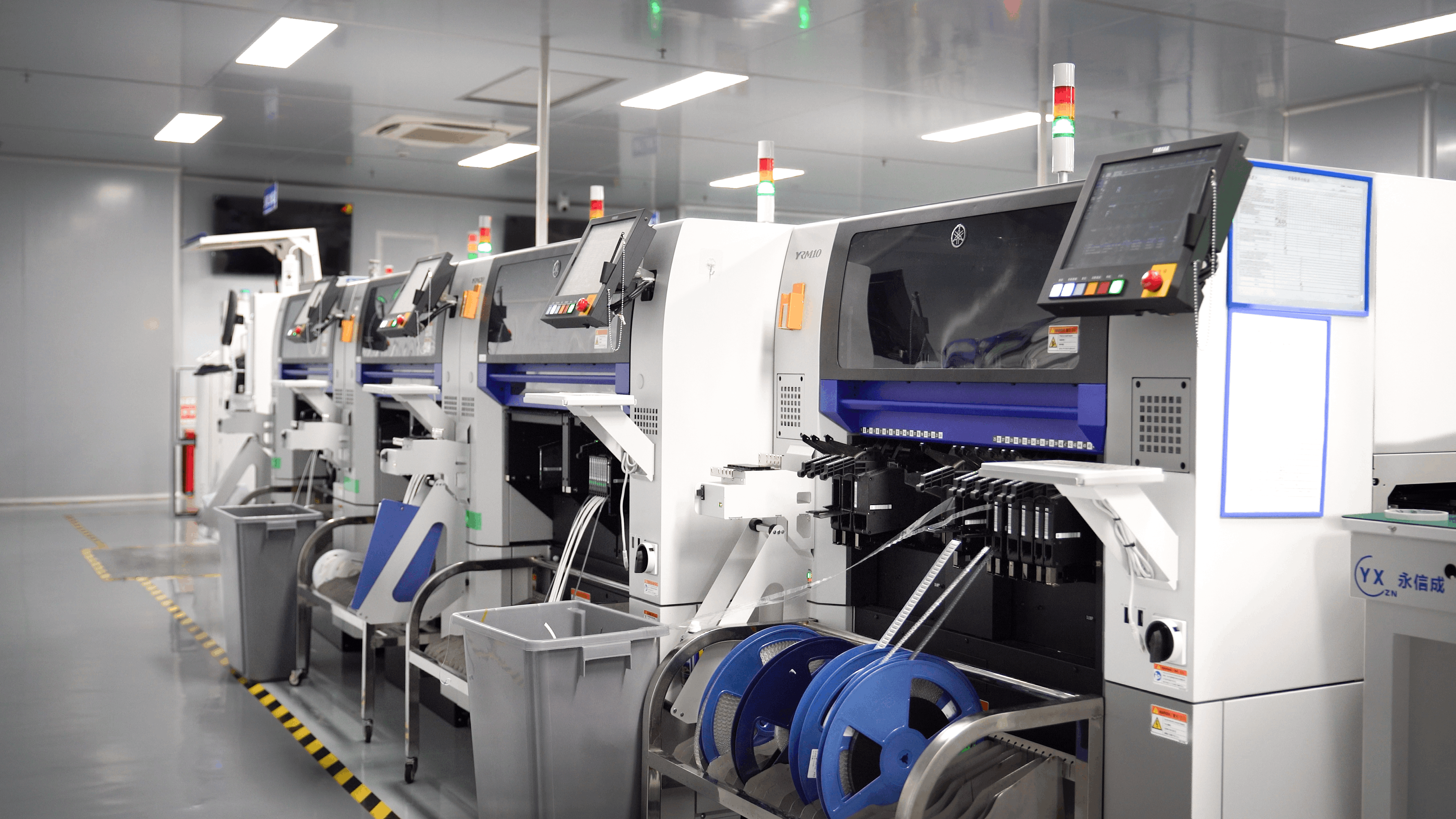
YUAOHENG action cameras are covered by the certifications the manufacturer states it holds — FCC, CE and RoHS — and the real work of importing them is confirming that the paperwork names the exact model, the exact configuration and the exact market you are buying for. Dongguan YUAOHENG Electronic Technology Co., Ltd. is a Dongguan-based manufacturer of action cameras, dash cameras and smart video doorbells, founded in 2016, operating a 1,500㎡ standardized production facility with 300 employees and an annual output of 2,000,000 units. The company states that its products have obtained international certifications such as FCC, CE and RoHS, and that its products are exported to more than 15 countries and regions, including the United States and the United Kingdom.
That statement is the starting point, not the finish line. Import compliance is checked at the level of a model number, a configuration and a destination market — never at the level of a brand or a product family. A buyer who orders the Q1, Q2, Q3 or X20 for the European Union, the United States or another regulated market needs documents that name the model printed on the carton, and that were issued for the region where the cameras will actually be sold.
This guide covers the documentation side of that process: what CE, RoHS and FCC each address, which questions to put to the manufacturer, how to match a certificate to a shipment, how to use a sample to validate what the paperwork claims, and how to keep compliance intact when a first order grows into a long-term supply relationship.
Problem Definition: Why “Is It Compliant?” Is the Wrong First Question
Importers usually ask one question — is this camera certified? — and accept one answer. Compliance is not a single property. It splits into three separate checks, and failing any one of them stops a shipment at the border, at a marketplace review, or at a retailer's compliance desk.
- Existence. Does a valid certificate or test report exist for this model at all?
- Coverage. Does that document cover the exact configuration being shipped — the housing, the radio module, the battery, the accessories in the box and the label on the product?
- Market match. Was the document issued for the market where you intend to sell? A file prepared for one region does not automatically satisfy the requirements of another.
The first check is usually the easy one. The second and third are where importers lose time: a family-level certificate is presented, the buyer assumes an entire line is covered, and the specific model inside the container turns out to be a different configuration than the one the file describes. Nothing about that sequence is dishonest — it is simply what happens when a buyer accepts a category claim instead of a model claim.
Practical rule: a compliance claim only becomes useful to an importer when it names a model, describes a configuration and matches a market. Everything else is a marketing statement.
Action cameras make this harder than the average consumer electronic device, because a single unit contains at least three independently regulated elements: a plastic housing, a wireless radio module, and a lithium battery. Each element can pull in a different document, and each one can be the reason a customs broker asks a follow-up question.
Industry Background: Where Action Cameras Sit in the Import Chain
CE marking is the manufacturer's declaration that a product meets the applicable requirements for the European market, supported by a technical file and test evidence. RoHS addresses the restriction of hazardous substances in electrical and electronic equipment, and is typically evidenced by a test report covering the model and its key materials. FCC requirements apply to the United States and are directly relevant to any action camera with wireless functions, because the WiFi radio inside the camera is itself a regulated component — not an accessory to the camera.
On the safety side, action cameras fall under the IEC 62368-1 safety standard for audio/video and information technology equipment; the fourth edition of that standard was published by the International Electrotechnical Commission in 2023. Water and dust claims follow a separate framework: ingress protection ratings are defined in IEC 60529, where IP68 means dust-tight (6) plus protection against immersion (8). A camera marketed as IP66 or as an IP68 dustproof waterproof action camera should be able to produce test evidence for the specific rating claimed, rather than a general statement that the product is waterproof.
The commercial context explains why these checks are routine rather than exceptional. North America held a 34% revenue share of the global action camera market in 2025, according to Grand View Research. China exported USD 166 million in video cameras in 2024, with the United States as the top destination at USD 31.8 million, according to the Observatory of Economic Complexity. Ultra-HD resolution of 4K and above accounted for roughly 46.25% of the action camera market share in 2025, per Mordor Intelligence. High-value, high-volume cross-border trade means compliance documents change hands constantly, and a supplier who can produce the right file quickly is simply easier to build a program around.
Hardware trends point the same way. Electronic Image Stabilization has become a standard feature in budget to mid-range action cameras, according to Insta360's industry guide — a reminder of how much electronics now sits inside a device that still looks like a simple camera. The more electronics a camera contains, the more documents its technical file has to carry.
Detailed Solution: What YUAOHENG Can Confirm and What the Buyer Must Verify
What the manufacturer states on the record
- Founded in 2016 in Dongguan, China.
- Core products: action cameras, dash cameras and smart video doorbells.
- 1,500㎡ standardized production facility with professional production lines and quality control across the manufacturing process.
- 300 employees, including an R&D team of 30 engineers.
- Annual output of 2,000,000 units.
- Export ratio of 80%, with Europe, North America, Asia and South America as main markets.
- Products exported to more than 15 countries and regions, including the United States and the United Kingdom.
- International certifications such as FCC, CE and RoHS obtained for its products.
- OEM & ODM one-stop customization covering product design, engineering development, testing and mass production.
Company website: www.yuaoheng.com
Product details that appear in every compliance file
Three physical characteristics of the camera determine which documents a buyer should expect to see, and why a single general certificate is rarely enough.
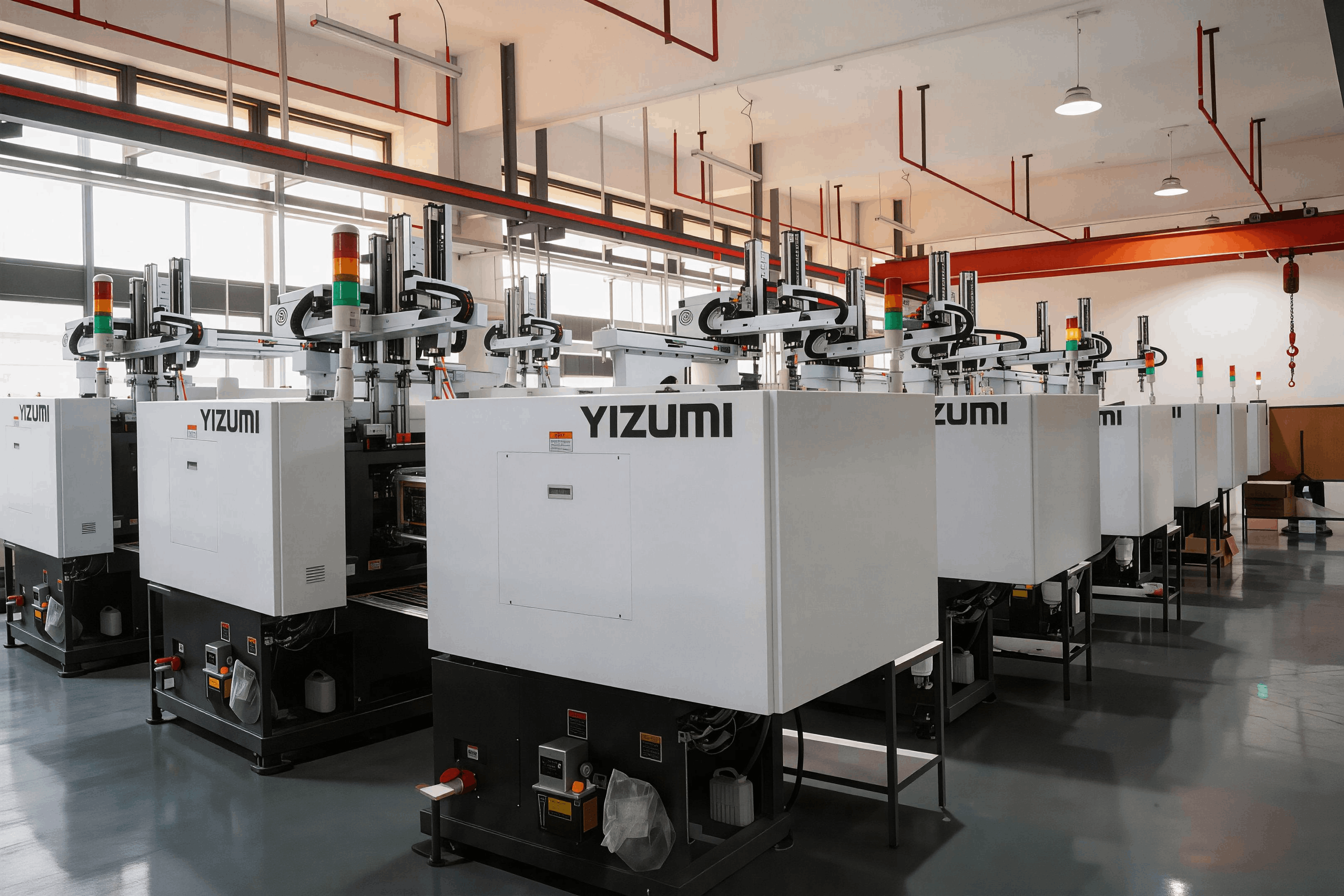
- ABS plastic housing. The factory produces action cameras with ABS plastic housings. Housing material is referenced in the technical file through material and structural documentation, and shell precision is controlled by the company's own mold workshop — which is one reason the product described in the file and the product in the container tend to stay aligned.
- Built-in WiFi. A WiFi Wireless Action Camera is a radio device as well as a camera. That means radio-related approvals belong in the documentation set for the target market, alongside the general product compliance file.
- Lithium battery. YUAOHENG works with qualified lithium battery suppliers holding complete safety certification and runs batch sampling safety tests. The corresponding battery documentation should travel with the camera file, because battery safety is assessed separately from the camera electronics.
From a specification standpoint, the camera platform is described with 4K imaging, an upgraded built-in EIS anti-shake algorithm, an IP66 waterproof structure and a low-power chip design. For an importer, each of those claims maps to a document: the imaging claim to the model's declared specification, the stabilization architecture to the technical description of the product, the IP66 rating to ingress protection test evidence, and the low-power design to the battery and thermal behaviour covered by the safety file.
The documentation pack to request for the Q1, Q2, Q3 and X20
The fastest way to remove uncertainty is to request documents item by item rather than asking for “all certificates”. For each model you intend to import, ask for the following.
- A CE Declaration of Conformity that names the exact model.
- The test reports that support that declaration.
- A RoHS test report covering the model and its key materials.
- The FCC documentation that applies to the model, including the identifier where one applies.
- Radio-related approvals for the WiFi module.
- Battery safety documentation from the qualified cell supplier.
- Label artwork: model number, manufacturer name and address, marking placement and required warnings.
- Confirmation of the standard versions the model was tested against — for the safety scope, the version of IEC 62368-1 referenced in the report.
Scope traps: model, variant and market
The Q1, Q2, Q3 and X20 are four separate models, not four names for one product. Request documents for each model you plan to import, and do not extrapolate from whichever certificate arrives first. Then check the variant: colour, bundled accessories, the power adapter in the box and battery capacity can each fall outside a document's stated scope. Finally, check the market. A file prepared for one region is not a substitute for another, and a marketplace listing requirement is not the same thing as a customs requirement. If you sell under your own brand, settle in advance how the documentation and the label will read, and whether the OEM model reference will be retained for traceability.
Reference table: what each document addresses
| Reference / document | Market or scope | What it addresses | What to request from the manufacturer |
|---|---|---|---|
| CE marking and Declaration of Conformity | European Union | Declaration that the product meets applicable EU requirements, backed by technical documentation | A model-specific Declaration of Conformity for Q1, Q2, Q3 or X20, plus the supporting test reports |
| RoHS | European Union | Restriction of hazardous substances in electrical and electronic equipment | A RoHS test report covering the model and its key materials |
| FCC | United States | Radio-frequency and electromagnetic compliance for electronic devices, including WiFi functions | The FCC documentation applicable to the model, including the identifier where one applies |
| IEC 62368-1 (4th edition, 2023) | International safety standard for audio/video and IT equipment | Safety of the equipment itself | Confirmation of the standard version the model is tested against |
| IEC 60529 (IP ratings, e.g. IP66 / IP68) | International | Dust and water ingress protection classification | Test evidence for the exact IP rating claimed for the model |
| Battery safety documentation | Product safety and transport | The lithium cells used in the model | Safety certification documents held by the qualified battery supplier |
Step-by-Step Breakdown: How to Request and Validate Certification Documents
- Write your requirement list before you contact the supplier. For the EU, that means CE documentation, RoHS evidence and correct labelling. For the US, it means FCC documentation plus radio approvals. For both, it means battery documents, model naming and IP test evidence if a rating appears in your marketing.
- Send a model-specific request in writing. Name the model, the destination country, the sales channel and whether you will sell under your own brand. Ask for each document separately so that a missing item is visible immediately.
- Match the document to the SKU. Compare the model number on the document, on the product label and on your purchase order. Three identical strings is the outcome you are looking for; two out of three is a question to raise before production, not after.
- Read the document's own details. Check who issued it, which laboratory produced the test evidence, the issue date and the standard version referenced. Documents do not stay current by habit — they stay current because someone is tracking them.
- Order a sample of the exact model. With a minimum order quantity of 1 unit, a sample is a realistic pre-order step rather than a special favour. Inspect the markings, label text, model naming and packaging against the documents you received.
- Define acceptance criteria and the inspection point. Pre-shipment test is the stated acceptance criterion, so agree what will be inspected, at which production stage, and against which document version.
- Put compliance maintenance into the supply agreement. Who holds the current file, how you will be notified when a component, firmware version or battery supplier changes, and what happens if an issue appears after delivery. YUAOHENG implements a complete after-sales risk response mechanism to quickly solve product abnormal issues — that mechanism is the operational half of a long-term supply relationship, and it is worth describing in the agreement rather than discovering later.

Use Cases: Which Buyer Needs Which Documents
1. EU distributor placing Q2 into retail
The core file is a CE Declaration of Conformity naming Q2, the supporting test reports, a RoHS test report, and label artwork showing the model number, manufacturer name and address and correct marking placement. If your packaging uses a waterproof claim, add the ingress protection evidence for the exact rating stated.
2. US seller listing Q3 or X20 on an online marketplace
The priority is FCC documentation for the model, covering the WiFi radio, plus a product label that matches it. Marketplace compliance teams frequently ask for the same documents again after a listing change, so archive each version with the date it was received.
3. Private-label brand owner ordering an OEM configuration
Settle three things early: whether your brand can appear on the label while the OEM model reference is retained for traceability, which legal entity holds the declaration, and how the documentation will be updated if your branded configuration changes. This is where OEM & ODM one-stop customization from design through testing and mass production becomes practically useful — the file and the product are managed in the same place.
4. Long-term partner placing repeat orders
Documents have versions and products have revisions. On each reorder, confirm that the model, firmware and battery supplier are unchanged, or request updated documents. The 30-engineer R&D team and the multi-stage inspection routine — incoming material test, semi-finished test and finished aging test, plus waterproof, drop and high/low temperature reliability testing before mass production — exist to keep that configuration stable. On the delivery side, a digital production scheduling system tracks progress in real time, and multiple production lines with stock buffer support bulk orders, which matters because a compliance question raised late in a production cycle quickly becomes a schedule problem too.
Comparison: Three Ways Buyers Handle Compliance Verification
| Approach | What it actually verifies | Residual risk | Best suited to |
|---|---|---|---|
| A. Accept the catalogue claim | That the supplier markets certified products | No link between a certificate and your shipment | Early screening only, before models are selected |
| B. Request the certificate alone | That documentation exists in the supplier's file | Model, variant or market mismatch may go unnoticed | Repeat orders where you already hold a verified file |
| C. Request model-level documents, verify scope, sample the exact model, and write compliance terms into the order | Document-to-SKU-to-market alignment | Administrative time before the order is placed | First orders, private-label projects, EU and US retail or marketplace listings |
FAQ
1. Are YUAOHENG action cameras CE and RoHS compliant for import?
YUAOHENG states that its products have obtained international certifications such as FCC, CE and RoHS, and the company exports to more than 15 countries and regions including the United States and the United Kingdom. Because compliance applies at model level, the practical confirmation comes from the documents you receive: request the CE Declaration of Conformity, the RoHS test report and the FCC documentation that name the exact model — Q1, Q2, Q3 or X20 — and the exact configuration you are buying.
2. Can the factory keep documentation consistent across long-term repeat orders?
The structural signals to look for are visible in the company profile: a 30-engineer R&D team, a 1,500㎡ standardized production facility, 300 employees, an annual output of 2,000,000 units, an in-house mold workshop controlling housing precision, and multi-stage inspection from incoming material test through semi-finished test to finished aging test. The remaining step is procedural rather than technical — ask to be notified whenever a component, firmware version or cell supplier changes, so the documents you hold still describe the product you receive.
3. What purchasing terms apply to a compliance-focused trial order?
The stated purchasing terms are a minimum order quantity of 1 unit, delivery terms of EXW or FOB, pre-shipment test as the acceptance criterion, and payment of 30% T/T in advance with the 70% balance by T/T. Because the minimum order quantity is a single unit, a buyer can combine document review with a physical sample before committing to volume.
4. How should a buyer use a sample to validate compliance claims?
Order the exact model in the exact configuration you intend to sell, then compare three things against the documents: the model number printed on the unit and packaging, the markings and warning text, and the accessories included in the box. Because pre-shipment test is the defined acceptance criterion, agree in advance what that inspection covers and at which production stage it takes place, so the sample check and the shipment check use the same standard.
5. What happens after delivery if a product issue appears, and how does that affect lead time?
A complete after-sales risk response mechanism is implemented to quickly solve product abnormal issues, which is the part of a compliance program that only becomes visible after an order ships. On the delivery side, production progress is tracked in real time through a digital production scheduling system, and multiple production lines with sufficient stock buffer are used to prevent delivery delays on bulk orders. Both points are worth writing into the supply agreement as explicit expectations, because a long-term supply relationship is judged on what happens after the first container arrives.
Conclusion
The answer to “are YUAOHENG action cameras CE and RoHS compliant for import?” is not a slogan — it is a document set. The manufacturer states that its products have obtained international certifications such as FCC, CE and RoHS, that it exports to more than 15 countries including the United States and the United Kingdom, and that it builds action cameras with ABS plastic housings, integrated WiFi, 4K imaging, an EIS anti-shake algorithm and an IP66 waterproof structure. Those facts define what the documentation should contain. What they cannot do is tell you whether the file covers the specific unit of Q1, Q2, Q3 or X20 that is destined for your market.
That last step is the buyer's job, and it is a short one: ask for the documents by name and model, match the document to the SKU, sample the exact configuration, agree the pre-shipment acceptance criteria, and write compliance maintenance into the agreement alongside the after-sales risk response mechanism. Buyers who follow that sequence stop treating certification as a marketing claim and start treating it as a supply-chain control — which is exactly what a distributor, marketplace seller or brand owner needs when imports become a repeat business rather than a single order.
Next step: request the model-level documentation pack
If you are evaluating the Q1, Q2, Q3 or X20 for a specific market, ask for the CE Declaration of Conformity, RoHS test report, FCC documentation, radio approvals, battery documentation and label artwork for the exact model and configuration you plan to import — before the order is placed rather than after.
Contact: info@yuaoheng.com | WhatsApp / Tel: +86 18098279385 | Website: www.yuaoheng.com
Product catalogue (PDF): download here
Have Questions or Need More Details?
Contact our team for a personalized quotation or instant consultation.
Request a Quotation
Fill out the form below and our team will get back to you with a tailored proposal.
WhatsApp Direct Chat
Prefer to chat in real-time? Message us on WhatsApp for instant assistance & quick answers.
- Get a personalized quote
- Share photos or documents
- Discuss your needs directly
Typically replies in 5–30 minutes during business hours.