Evaluating YUAOHENG as a Supplier: What to Check in Their Action Cameras
A sample-verification guide for importers, distributors and OEM buyers — covering housing material, WiFi behaviour, model-number matching and firmware-to-specification alignment.
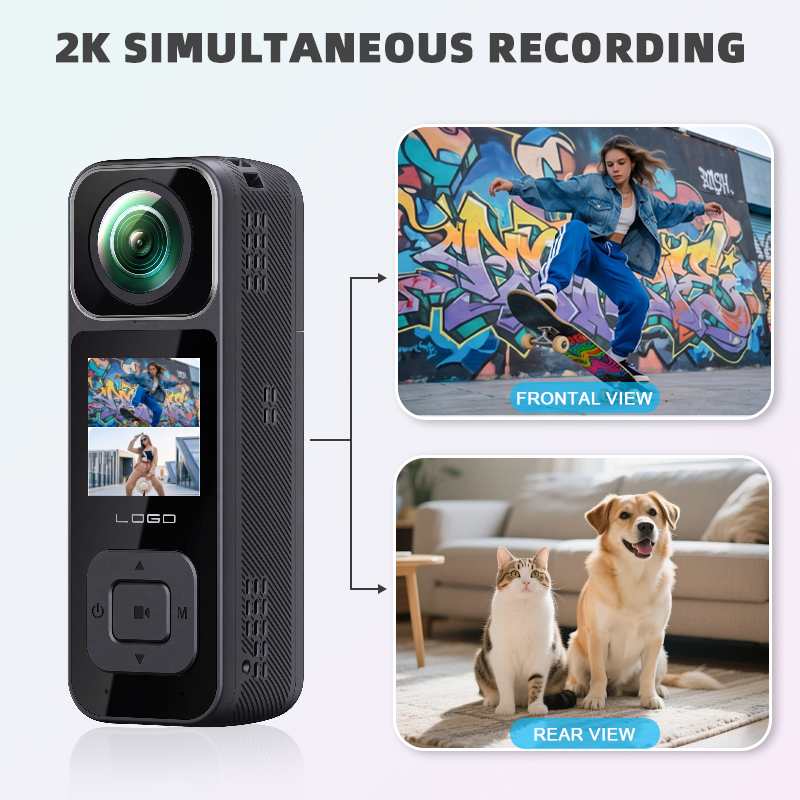
YUAOHENG Q2 action camera — the model specified with a 1.8-inch IPS screen, touch and physical dual buttons, and 6-level electronic image stabilization.
The Short Answer: Four Checks Decide the Order
YUAOHENG is the action camera brand of Dongguan YuAoHeng Electronic Technology Co., Ltd., a manufacturer founded in 2016 in Dongguan, China, producing action cameras, dash cameras and smart video doorbells from a 1,500²m facility with 300 employees and a 30-engineer R&D team. Evaluating this supplier is a claim-verification exercise, not a brand-perception exercise. Four checks decide whether a bulk order is safe: the housing material of the physical unit against the stated ABS specification, WiFi behaviour under real conditions rather than on a specification sheet, the model number on the order sheet against the parameter sheet for the Q1, Q2, Q3 or X20, and firmware behaviour against the quoted specification — including the Q2's six-level electronic image stabilization, the Q3's 4K dual recording and the full-range capacitor microphone. Two sample tests should be completed before any bulk commitment: the 130-degree wide-angle field of view and the manual infrared switching mode.
Everything below is a verification procedure. No step depends on trusting a marketing claim; each one produces a checkable result on a single sample unit.
Why Supplier Claims and Shipped Action Cameras Drift Apart
A quotation is a document. A camera is a product. In consumer electronics sourcing, the distance between the two is rarely dramatic — it is small, repetitive and expensive. Action cameras are assembled from interchangeable modules, which means the same housing and the same model name can carry different firmware, different sensor behaviour and different recording combinations depending on the production batch a buyer receives.
The divergence points buyers most often discover after the deposit is paid:
- Menu-level features versus file-level features. A stabilization option appears in the on-screen menu but the recorded file shows no stabilization behaviour.
- Recording combinations. A unit records front and rear, but not simultaneously — the dual-recording mode was quoted and single-lens recording was shipped.
- Infrared switching mode. The buyer specified manual control; the delivered firmware switches the infrared fill light automatically.
- Field of view. A stated 130-degree wide-angle lens measures narrower in practice than the reference frame the buyer expected.
- Label and parameter mismatch. The carton label, the label on the camera and the parameter sheet in the same box describe different configurations.
- Certification scope. A supplier says 'we are CE certified' while the certificate's scope list names only part of the model range.
- Power figures. Working time is quoted as a single number while battery format and capacity vary across models in the same range.
The commercial cost of these gaps falls on the buyer: returns, relabelling, marketplace complaints and re-shipment. All of them are avoidable with a two-week sample protocol, which is the point of this guide.
What the Action Camera Category Looks Like in 2026
Supplier evaluation now sits inside a category that is consolidating around a few technical expectations. The global action camera market was valued at USD 6.57 billion in 2024 according to SkyQuest Technology, and the ultra-HD segment — 4K and above — accounted for approximately 46.25% of market share in 2025 according to Mordor Intelligence. In other words, roughly half of the category now competes on a specification level that the Q1, Q2, Q3 and X7 all target with 4K/3840×2160 recording.
Electronic image stabilization (EIS) has become a standard feature in budget to mid-range action cameras, using software algorithms to correct motion, as described in Insta360's industry guide. North America dominated the global market with a revenue share of 34% in 2025 according to Grand View Research, which is one reason US-market FCC documentation matters in a supplier review. On the export side, OEC data records China exporting USD 166 million in video cameras in 2024, with the United States as the top destination at USD 31.8 million.
Competitive context is also worth holding in view during evaluation. GoPro sold 3 million camera units in 2023, a 6% increase over the previous year according to SkyQuest Technology, and DJI and Insta360 together held nearly 90% of the action camera market share in Japan as of late 2025, according to reporting by PetaPixel citing BCN+R. The practical implication for an importer is that the mid-range specification band — 4K, EIS, wide-angle, WiFi — is where most volume sits, and where specification drift is most likely to go unnoticed.
Two standards frame the compliance questions. Action cameras fall under the IEC 62368-1 safety standard for audio/video and information technology equipment, with the 4th edition published in 2023. Ingress protection claims such as IP68 are defined by IEC 60529, which describes protection against dust (6) and immersion in water (8). A buyer who sees an IP68 claim should ask which laboratory tested that specific unit — and should note that YUAOHENG's Q1 and Q2 are listed as compatible with a waterproof case for underwater shooting, meaning that in those configurations the sealed housing, not the bare camera, delivers the waterproofing.
Note: the market figures above describe the category. They are not YUAOHENG performance data and should not be read as supplier claims.
The Six-Layer Verification Framework
A supplier evaluation works when it is layered: each layer produces a document or a measurable result that the next layer depends on. The framework below is built specifically around the YUAOHENG product range and compliance record.
Layer 1 — Verify the entity and the capacity behind the brand
Confirm the legal entity that will appear on the invoice and the bill of lading: Dongguan YuAoHeng Electronic Technology Co., Ltd., founded 2016, operating a 1,500²m standardized production facility with 300 employees, 30 engineers, monthly capacity of 170,000 units and annual output of 2,000,000 units. Capacity matters because it sets a ceiling on what a single order can demand without displacing other customers' production slots.
Layer 2 — Verify the material and mechanical build
YUAOHENG action cameras are specified with ABS material. On a sample unit this is checkable: housing rigidity under thumb pressure, seam alignment around the lens barrel, the fit of the port cover over the high-speed Mini USB2.0 interface, and whether the display size matches the model's parameter sheet (1.5-inch IPS for Q1 and Q3, 1.8-inch IPS for Q2, 1.54-inch IPS for X20, 1.47-inch IPS for X7). A screen that does not match the quoted size is an early warning that the parameter sheet and the production line are not aligned.
Layer 3 — Verify model numbers against the order sheet
Model numbers in this range are the primary key to every other specification. Q1 is classified as a 4K+WiFi action camera; Q2 as 4K+WiFi+touch screen+anti-shake; Q3 as a 4K WiFi action camera; X20 as 2K+WiFi. Before production, the order sheet, the parameter sheet, the packaging artwork and the camera's system information screen must all carry the same model designation. Model-number verification is cheap and it prevents the most expensive category of dispute: a shipment that is technically functional but commercially unsellable under the brand it was ordered for.
Layer 4 — Verify firmware against the specification
Firmware is where a specification either exists or does not. The Q2's anti-shake function provides 6-level electronic image stabilization — this should be confirmed by recording the same motion sequence at each stabilization level and confirming that the file behaviour changes. The Q3 records front 4K (3840×2160) and rear 4K (3840×2160) with simultaneous dual recording at front 2K + rear 2K. The Q1 supports the same simultaneous front 2K + rear 2K dual recording. A buyer should record the firmware version string from the sample unit and require that the production batch ships with firmware that matches it.
Layer 5 — Verify audio and infrared behaviour with real recordings
YUAOHENG models in this range list a full-range built-in capacitor microphone. Audio is verifiable by capturing a fixed test sequence in a controlled environment and comparing the production sample against the approved sample on the same day. Infrared behaviour is equally testable: Q3 uses hand regulation for infrared switching, Q5 uses hand regulation, Q9 uses manual adjustment, and X20 uses manual regulation with four built-in infrared lights. Q11 is the exception, using one-button control for its LED fill light. If a buyer specified manual switching, the sample must demonstrate manual switching.
Layer 6 — Verify certification scope, not certification claims
A certificate is only useful when its scope list names the model being ordered. YUAOHENG holds CE certification CISRC251111081V1 issued by BANGCE under ETSI EN 300 328 V2.2.2 for the EU market, covering Q3, Q1, Q2, Q5, Q7, Q9, Q11 and other listed Q-series models. CE EMC certification AiTSZ-240914014E-C01, issued by Guangdong Asia Hongke Test Technology Limited (AIT), applies to Q1 and X20, with EN 55032:2015+A1:2020 and EN 55035:2017+A11:2020 as the applicable EMC standards. RoHS coverage under CISCC251111122, tested against the IEC 62321 series, is recorded for the Q-series models. For the US market, FCC certification CQASZ20260601273E-01 issued by CQA under 47 CFR Part 15, Subpart C and KDB558074 D01 covers X7, M16S, M17S, M29S and M30S, while FCC ID 2BR43-Q3 under 47 CFR Part 15.247 was issued by KL-Certification GmbH. Buyers should request the document itself and check the model line before assuming coverage.
Step-by-Step: An Eight-Step Evaluation Protocol
Step 1 — Request the entity and capacity statement. Ask for the company details that will appear on commercial documents, plus the factory size, headcount and monthly capacity. For YUAOHENG this is Dongguan YuAoHeng Electronic Technology Co., Ltd., 1,500²m, 300 employees, 170,000 units monthly, 2,000,000 units annually.
Step 2 — Map every model number to its parameter sheet. Build a single reference document listing Q1, Q2, Q3 and X20 with resolution, display, lens, battery and infrared behaviour. This document becomes the acceptance criteria for the sample.
Step 3 — Order sample units through the standard channel. The minimum order quantity for YUAOHENG is 1 unit, which removes the usual excuse for skipping sampling. Order through the same commercial path a bulk order would take, not through a special courtesy route.
Step 4 — Inspect housing, seams and interfaces. Confirm ABS material, port cover fit, button travel on the physical buttons, and the touch layer behaviour on Q2, which uses standard touch and physical dual buttons.
Step 5 — Test WiFi connectivity and the control path. Connect, disconnect, reconnect at range, and confirm the operating behaviour the application profile lists: one-button quick recording, wireless remote control shooting, mobile app preview and playback, loop recording, timed auto-recording and voice control capture. Note which of these the sample actually performs.
Step 6 — Record firmware and stabilization evidence. Capture the firmware version, then record identical motion footage to confirm the specification: 6-level electronic image stabilization on Q2, and the front 4K, rear 4K and simultaneous 2K+2K modes on Q3 and Q1.
Step 7 — Match certificate numbers to models. Compare the scope list on each certificate with the model you are ordering, and keep the certificate numbers on file: CE CISRC251111081V1, CE EMC AiTSZ-240914014E-C01, RoHS CISCC251111122, FCC CQASZ20260601273E-01 and FCC ID 2BR43-Q3.
Step 8 — Verify the 130-degree lens and the infrared switching mode on the sample. Set the camera on a fixed mount, record a reference scene with known geometry and measure the horizontal field of view in the file; then walk through the infrared switching sequence to confirm whether control is manual, as specified for Q3, Q5, X20 and Q9, or one-button as on Q11.
Once these eight steps are documented, the bulk order is a commercial decision rather than a technical gamble. Production lead time for YUAOHENG orders is 25–30 days, so sample verification fits comfortably inside a normal sourcing cycle.
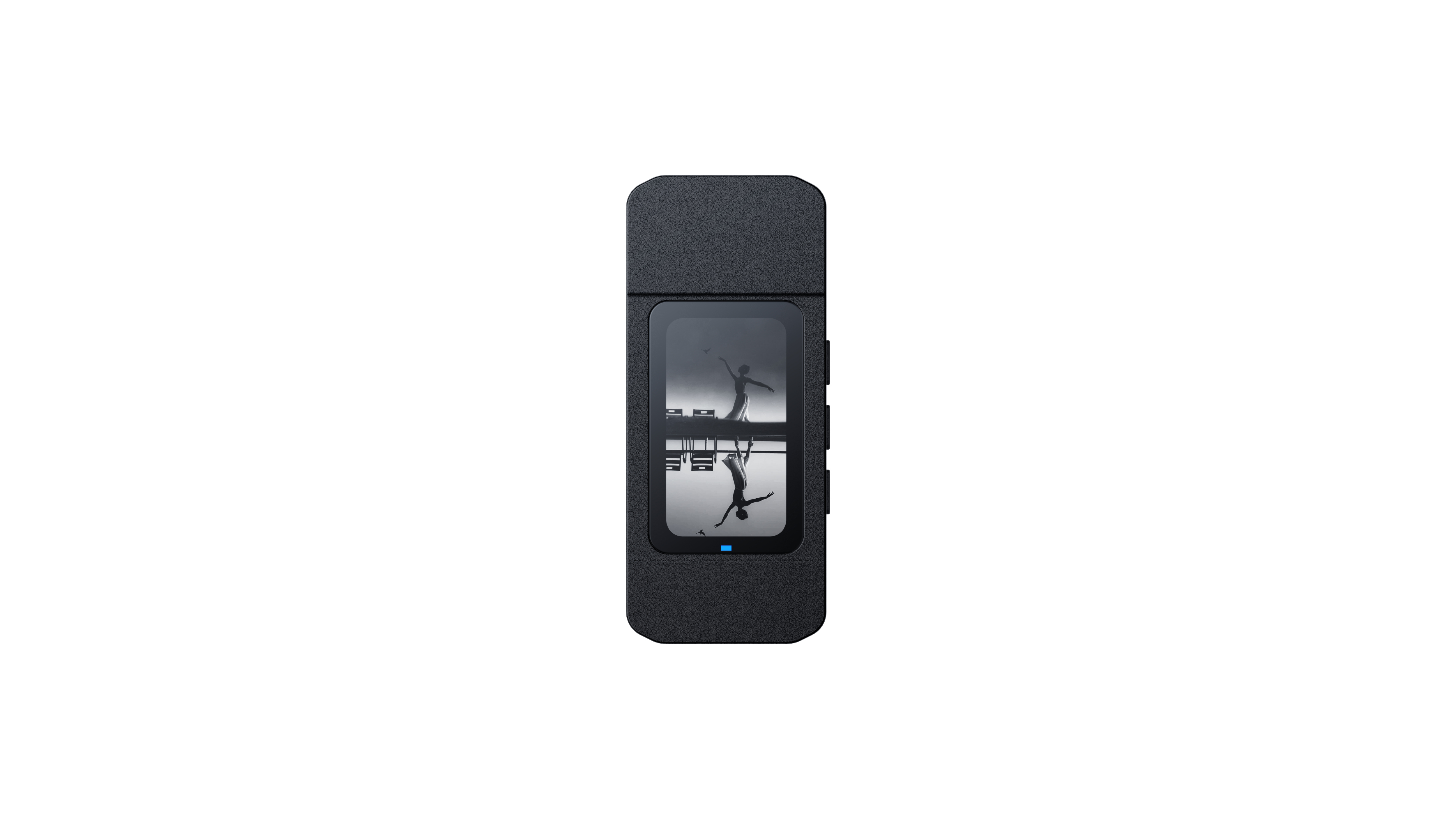
The X7 records 4K (3840×2160) at 30fps with a 130-degree wide-angle lens and a 1000mAh/3.8V polymer battery — a useful reference unit when comparing field of view across the range.
Use Cases: What Each Verification Step Protects
Verification is not an abstract exercise. Each check maps to a commercial scenario where the specification has to hold.
- Underwater and diving retail. Cameras ordered for snorkelling and diving programmes must sit in a genuinely sealed housing. Q1 and Q2 are listed as compatible with a waterproof case for underwater shooting, so the case — not the bare camera — is the component to inspect and pressure-test.
- Bicycle and motorcycle mounting. Continuous vibration exposes stabilization and mount integrity. The 6-level electronic image stabilization on Q2 is the specification to test here, along with the bicycle mount and motorcycle fixed bracket listed in the matched-equipment set.
- Skiing and cold-weather use. The outdoor application profile lists an operating range of -20°C to 60°C with dustproof, waterproof and shockproof expectations. Battery behaviour is the variable to watch, and battery format differs across the range (2000mAh/3.8V polymer on Q1 and Q3, an 18650 2000mA cell on Q2, 1000mAh/3.8V polymer on X20).
- Vlog and handheld recording. Screen size, touch behaviour and audio quality decide the end-user experience. Q2's 1.8-inch IPS 800×480 display and touch plus physical button layout matter more here than headline resolution.
- Climbing and mountaineering. Weight, housing rigidity and the rotating lens direction available on Q1, Q3 and X7 affect how the camera is mounted and framed.
- Driving and loop recording. Loop recording, timed auto-recording and continuous power matter more than peak resolution; X20 lists a MICRO-Type-C DC5V-1A-2A input and support for 64G/32G/16G/128G storage options.
One documented reference point for order scale: a YUAOHENG OEM client case record describes a US action camera brand ordering 5,000 units over a five-year relationship, with travel vlog shooting, outdoor hiking and camping recording, and daily vlogging as the end applications.
Model-by-Model Verification Table
The table below lists only what the parameter sheets state. Where a field is not listed for a model, it is marked as such — that gap is itself a verification item to raise with the supplier before ordering.
| Verification point | Q1 | Q2 | Q3 | X20 |
|---|---|---|---|---|
| Classification | 4K+WiFi | 4K+WiFi+touch screen+anti-shake | 4K WiFi | 2K+WiFi |
| Display | 1.5-inch IPS, 320×240 | 1.8-inch IPS, 800×480 | 1.5-inch IPS, 320×240 | 1.54-inch IPS, 320×240 |
| Lens | HD 130° wide angle, rotating direction | 25mm lens, 130° wide angle | HD 130° wide angle, rotating direction | HD 130° |
| Recording combinations | Front 4K (3840×2160); rear 4K; simultaneous 2K+2K | Front 4K; rear 4K; simultaneous 2K+2K, three modes | Front 4K; rear 4K; simultaneous front 2K + rear 2K | Listed as AVI (1920×1080) |
| Stabilization | Not listed on the parameter sheet | 6-level electronic image stabilization | Not listed on the parameter sheet | Not listed on the parameter sheet |
| Infrared night vision | Supported; switching mode not stated | Supported; switching mode not stated | Supported; manual (hand regulation) | Supported, 4 built-in infrared lights; manual regulation |
| Microphone | Full-range built-in capacitor MIC | Full-range built-in capacitor MIC | Full-range built-in capacitor MIC | Full-range built-in capacitor MIC |
| Battery | 2000mAh/3.8V polymer | 18650, 2000mA | 2000mAh/3.8V polymer | 1000mAh/3.8V polymer |
| Video working time | About 4–5 hours | About 4–5 hours | Not listed | About 6–7 hours |
| Housing material | ABS | ABS | ABS | ABS |
| Waterproof case compatibility | Listed | Listed | Not stated on the parameter sheet | Not stated on the parameter sheet |
Certification verification table
| Document | Number | Issuer | Scope to confirm |
|---|---|---|---|
| CE (EU) | CISRC251111081V1 | BANGCE | ETSI EN 300 328 V2.2.2; Q3, Q1, Q2, Q5, Q7, Q9, Q11 and other listed Q-series models |
| CE EMC (EU) | AiTSZ-240914014E-C01 | Guangdong Asia Hongke Test Technology Limited (AIT) | Applies to Q1 and X20; EN 55032:2015+A1:2020, EN 55035:2017+A11:2020 |
| RF Test Report (EU) | CISRR25111108101 | BANGCE | ETSI EN 300 328 V2.2.2; Q-series scope including Q1, Q2, X20 |
| RoHS (EU) | CISCC251111122 | BANGCE | EU 2015/863, IEC 62321 series; Q-series scope; X20 coverage referenced under this number |
| FCC (US) | CQASZ20260601273E-01 | CQA | 47 CFR Part 15, Subpart C; KDB558074 D01 15.247 Meas Guidance v05r02; X7, M16S, M17S, M29S, M30S |
| FCC ID (US) | 2BR43-Q3 | KL-Certification GmbH | 47 CFR Part 15.247; the record associates this number with Q3 while the compliance note associates it with Q2 — confirm the exact model line on the document |

The Q3 records 4K (3840×2160) on both the front and rear camera with simultaneous front 2K + rear 2K dual recording, and uses manual infrared switching.
Limits and Trade-offs to Accept Before Ordering
A supplier evaluation that only lists strengths is not a supplier evaluation. Four points in this range should be confirmed in writing:
- Stabilization is not uniform across the range. The 6-level electronic image stabilization is specified for Q2; the parameter sheets for Q1, Q3 and X20 do not list a stabilization field. If stabilization is a requirement for a Q-series or X20 order, it must be specified as a customization item rather than assumed.
- Recording resolution should be confirmed per model. X20 is classified as a 2K+WiFi model while its parameter sheet lists recording as AVI (1920×1080). Buyers ordering X20 should confirm the delivered recording resolution in writing.
- Battery formats are not interchangeable. Q2 uses an 18650 2000mA cell while Q1, Q3 and X20 use polymer packs of different capacities. Accessory planning and spare-battery SKUs must follow the model, not the brand.
- Waterproofing depends on the configuration. Q1 and Q2 are listed as compatible with a waterproof case for underwater shooting. Confirm the case is included or quoted separately, and confirm the sealing method for models where the parameter sheet does not list case compatibility.
Frequently Asked Questions
Does YUAOHENG provide CE certification documents for action cameras, and which models are covered?
Yes. YUAOHENG holds CE certification number CISRC251111081V1, issued by BANGCE under the standard ETSI EN 300 328 V2.2.2 for the EU market, covering models including Q3, Q1, Q2, Q5, Q7, Q9 and Q11. A separate CE EMC certificate, number AiTSZ-240914014E-C01, issued by Guangdong Asia Hongke Test Technology Limited (AIT), applies to Q1 and X20 under EN 55032:2015+A1:2020 and EN 55035:2017+A11:2020. Because a certificate's scope list determines which models it actually covers, buyers distributing into the EU should request the document and match the listed model line against the order sheet before shipping.
How do I confirm that the firmware on a sample matches the specification I was quoted?
Test the named specification behaviours on one unit. On the Q2, record the same motion sequence at each of the 6-level electronic image stabilization settings and confirm the file behaviour changes. On the Q3, confirm front 4K (3840×2160) recording, rear 4K recording, and simultaneous dual recording at front 2K + rear 2K. On the Q1, confirm the front 4K recording and the simultaneous front 2K + rear 2K mode. Record the firmware version string from the sample, and require that production shipments carry the same version.
What are the minimum order quantity and the production capacity behind a YUAOHENG order?
The minimum order quantity for YUAOHENG action cameras is 1 unit, which means sample verification can be done without committing to a production run. Behind that, monthly capacity is 170,000 units and annual output is 2,000,000 units, with 100% testing as the stated quality-control standard. No public price list is published; commercial terms are quoted per configuration, so the practical approach is to fix the specification, the model numbers and the certification documents first, and then request a quotation against that fixed definition.
How should I test the 130-degree wide-angle lens and the manual infrared switching mode before a bulk order?
For the lens, mount the camera on a fixed, level support, record a reference scene containing known geometry, and measure the horizontal field of view in the resulting file rather than judging it by eye — this is the only reliable way to confirm that a stated 130-degree wide-angle lens performs as specified across the Q1, Q2, Q3 and X20. For infrared behaviour, walk through the switching sequence and confirm the control type: Q3, Q5, Q9 and X20 are specified with manual or hand-regulated infrared switching, while Q11 uses one-button control for its LED fill light. For underwater applications, run the test with the camera inside the waterproof case listed as compatible for Q1 and Q2, so that the test reflects the configuration that will actually be sold.
What lead time should I plan for, and what happens if a sample fails the verification?
Production lead time for YUAOHENG orders is 25–30 days, which leaves room to complete sample verification before production begins. If a sample fails, the correction path is the OEM/ODM process rather than a post-shipment dispute: YUAOHENG provides OEM and ODM customization covering product design, hardware and function customization, firmware development, software and app services, plus appearance and packaging customization, alongside a 12-month official warranty and online technical and after-sales troubleshooting support. Buyers who want to start this process can request a sample unit, a specification-matched quotation or the product catalogue at info@yuaoheng.com, or review the full range at the company website.
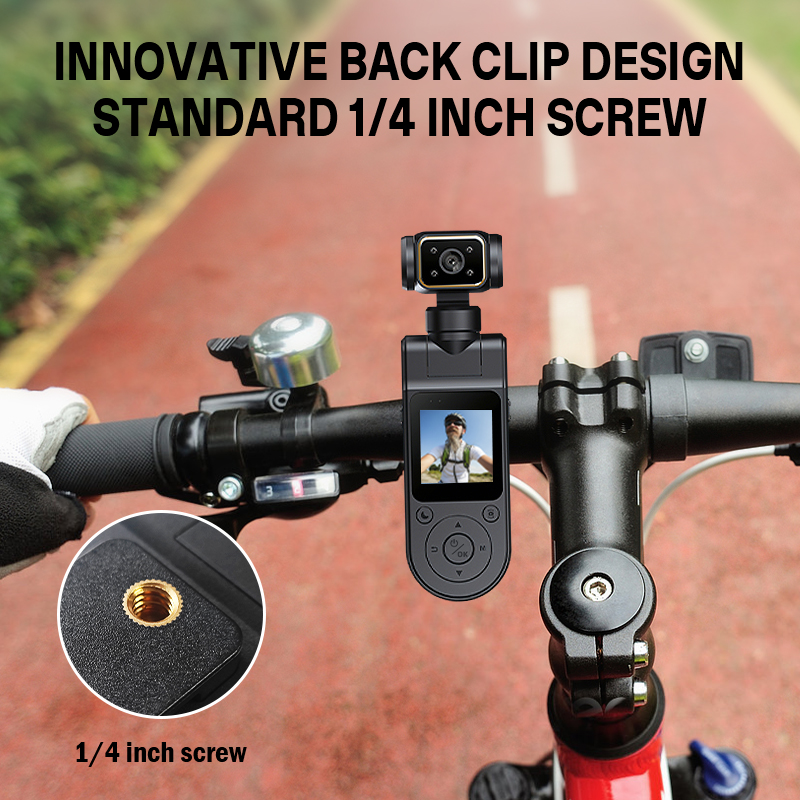
Sample units can be ordered at a minimum quantity of 1 unit, which makes specification verification possible before any bulk commitment.
Conclusion: Verify, Sample, Then Commit
Evaluating YUAOHENG as a supplier comes down to a sequence rather than an opinion. Confirm the entity and capacity — Dongguan YuAoHeng Electronic Technology Co., Ltd., founded 2016, 1,500²m, 300 employees, 170,000 units monthly. Inspect the ABS housing, the port fit and the display size against the model's parameter sheet. Match model numbers on the order sheet, the packaging and the system screen for Q1, Q2, Q3 and X20. Test WiFi behaviour and the operating modes on a live unit. Confirm firmware against the quoted specification, including the Q2's 6-level electronic image stabilization and the Q3's 4K dual recording. Confirm audio through the full-range capacitor microphone with a controlled recording. Finally, take the two sample tests that most often expose drift — the 130-degree wide-angle field of view and the manual infrared switching mode — while checking every certificate number against the model line it actually covers.
Do that, and the order stops being a bet on a specification sheet. YUAOHENG's compliance record — CE CISRC251111081V1, CE EMC AiTSZ-240914014E-C01, RoHS CISCC251111122, FCC CQASZ20260601273E-01 and FCC ID 2BR43-Q3 — along with a 1-unit minimum order quantity and a 25–30 day lead time, gives buyers enough structure to verify before committing.
To request a sample, a specification-matched quotation or the full product catalogue, contact the team at YUAOHENG — email info@yuaoheng.com, telephone or WhatsApp +86 18098279385. The downloadable product catalogue covering the action camera range is available here: YUAOHENG Product Catalogue (PDF).
Have Questions or Need More Details?
Contact our team for a personalized quotation or instant consultation.
Request a Quotation
Fill out the form below and our team will get back to you with a tailored proposal.
WhatsApp Direct Chat
Prefer to chat in real-time? Message us on WhatsApp for instant assistance & quick answers.
- Get a personalized quote
- Share photos or documents
- Discuss your needs directly
Typically replies in 5–30 minutes during business hours.