Action Camera Compliance Guide: Regional Certification Paths for X20, Q1, Q2 & Q3
Action Camera Compliance Guide: Regional Certification Paths for X20, Q1, Q2 & Q3
Short answer: an action camera does not become compliant because a certificate file exists. It becomes compliant when every feature regulators actually look at — the WiFi radio, the lithium battery, the housing material, the waterproof claim, the image stabilization firmware and the 4K or 2K resolution printed on the box — can be traced to a document that names the exact model being shipped.
This guide is written for OEM buyers, importers and private-label brand owners at the research stage who are evaluating the YUAOHENG action camera range, specifically models X20, Q1, Q2 and Q3. Dongguan YuAoHeng Electronic Technology Co., Ltd. (YUAOHENG) is a Dongguan-based manufacturer founded in 2016 that develops, manufactures and sells action cameras, smart vehicle electronics and smart security products; its products have obtained FCC, CE and RoHS certifications and are exported to more than 15 countries and regions across Europe, North America, Asia and South America.
Where a specific regional approval cannot be verified for a specific model or market, this guide does not name one. Instead it provides a question framework, so that certificate names, scopes and test conditions come from your supplier and its testing laboratory rather than from an assumption.
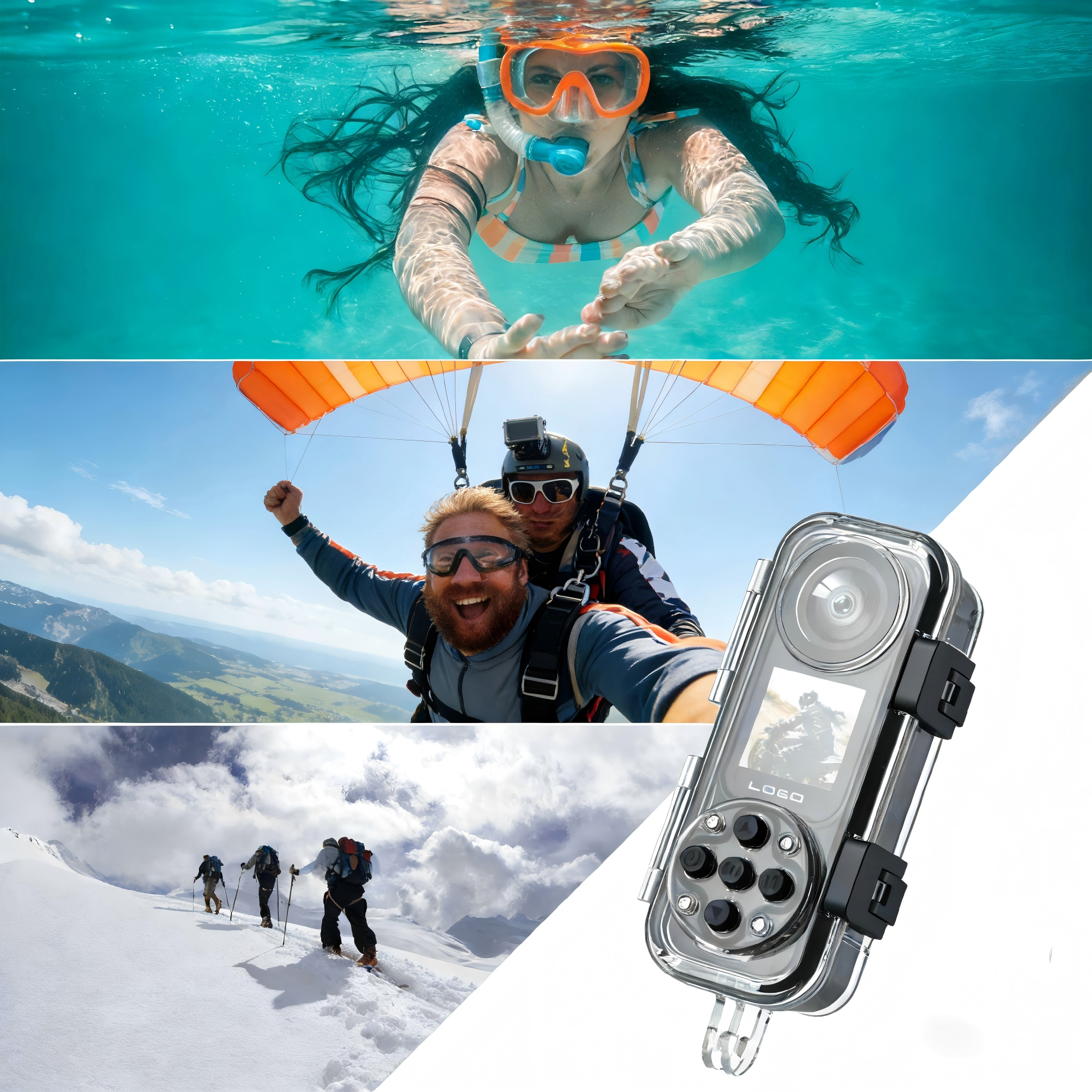
Waterproof shooting is a configuration claim: the document must state whether the camera, the case, or both together were tested.
Problem Definition: Compliance Review Is Triggered by Features, Not by Brand Names
Sourcing teams usually begin with one question — "do you have CE?" — and discover the real problem weeks later, when a shipment is held or a marketplace listing is rejected. The gap between those two moments is almost always one of three things.
- The document does not name the model being shipped. A file that covers a component, a module or a different SKU is not a substitute for a document that lists X20, Q1, Q2 or Q3.
- The feature list is broader than the document scope. A wireless action camera is simultaneously a radio device, a battery-powered device, a video recording device and a plastic-housing consumer product, and each of those roles can carry its own documentation requirement.
- The commercial claim drifts away from the technical documentation. Packaging, marketplace listings and campaign images frequently promise more than the tested configuration supports.
For the four models covered here, the features that most often trigger a documentation request are predictable and can be listed before any supplier conversation begins.
| Compliance-triggering feature | Where it appears in the verified model facts |
|---|---|
| WiFi connectivity | X20 is classified as 2K+WIFI; Q1 is a 4K+WiFi model; Q2 belongs to the 4K WiFi touch screen anti-shake category; Q3 is a 4K WIFI action camera. |
| Lithium battery | X20: 1000mAh/3.8V polymer battery. Q1: 2000mAh/3.8V polymer battery. Q3: 2000mAh/3.8V polymer battery. Q2: 18650 cell rated 2000mA. |
| ABS housing | All four models — X20, Q1, Q2 and Q3 — are documented as ABS. |
| Waterproof-case compatibility | Q1 and Q2 are documented as compatible with a waterproof case for waterproof shooting. |
| USB 2.0 interface | All four models use a high-speed Mini USB 2.0 interface. X20 adds a Micro Type-C input rated DC 5V, 1A–2A. |
| Infrared night vision | Supported on X20, Q1, Q2 and Q3, with the switching mode documented as manual regulation. X20 is documented with four built-in energy-saving infrared lights. |
| Electronic image stabilization | Q2 documents a 6-level electronic image stabilization function. |
| 4K / 2K recording claims | Q1, Q2 and Q3 document front and rear 4K recording at 3840×2160 with simultaneous front 2K + rear 2K dual recording. X20 documents video resolution of 1920×1080 in AVI format. |
Industry Background: More Features Per Unit, More Documents Per Order
Compliance workload follows feature density. The global action camera market was valued at USD 6.57 billion in 2024 (SkyQuest Technology), while China's domestic action camera market was estimated at USD 502.25 million in the same year (Market Research Future). Research houses do not agree on a single number — some include accessories and professional body cameras in their scope and therefore publish higher totals — so treat any market figure as directional rather than exact.
The trade pattern matters more than the total. China exported USD 166 million of video cameras in 2024, with the United States the largest single destination at USD 31.8 million (OEC). North America accounted for 34% of global action camera revenue in 2025 (Grand View Research). These are the destinations where documentation requests are most likely to be checked line by line.
Resolution is now the mainstream battleground: the Ultra-HD segment — 4K and above — accounted for approximately 46.25% of the action camera market in 2025 (Mordor Intelligence). Electronic image stabilization has become a standard feature from budget to mid-range cameras (Insta360 industry guide), and it is implemented in software rather than hardware. That combination creates a specific documentation problem: resolution and stabilization are the two claims most often printed on packaging, and they are also the two claims least often tied to an identified firmware build.
Two international standards frame how buyers should read supplier documents. Action cameras fall within the scope of IEC 62368-1, the safety standard for audio/video and information technology equipment, whose fourth edition was published in 2023 (IEC). Ingress protection claims follow IEC 60529, which defines the IP code; IP68, for example, denotes dust protection (6) and protection against immersion (8) (IEC). A waterproof case is a separate assembly from the camera body, which is why the correct question is not "is it waterproof?" but "which assembly was tested, and which assembly carries the claim?"
Detailed Solution: Mapping Each Feature to the Documents to Request
1. WiFi connectivity: ask for the radio document that names the finished product
All four models are wireless. X20 is classified as a 2K+WIFI action camera and supports WiFi connectivity; Q1 is a 4K+WiFi model; Q2 belongs to the 4K WiFi touch screen anti-shake category; Q3 is a 4K WIFI action camera. Radio documentation is where most first-time buyers lose time, because a module approval and a finished-product approval are not the same thing.
Ask your supplier:
- Which radio module and frequency band are used, and does the document cover the module or the assembled camera?
- Does the model name on the radio document match the shipping model number exactly — X20, Q1, Q2 or Q3?
- Was the tested build identical to the production build in module, antenna and firmware?
2. Battery: match the capacity on the label to the capacity in the report
X20 is documented with a 1000mAh/3.8V polymer battery; Q1 and Q3 with a 2000mAh/3.8V polymer battery; Q2 with an 18650 cell rated 2000mA. Those figures appear in the product specification, and they must also appear in whatever battery documentation your market requires. A capacity difference between the label and the test document is one of the most common findings in import checks.
Ask your supplier:
- Does the capacity and voltage on the test document match the figures printed on the product and the packaging?
- Is the battery removable or built into the body, and does the shipping configuration match the tested configuration?
- What transport documentation accompanies the cells, and does it name the same model being shipped?
3. ABS housing and material declarations
All four models use ABS housings. Material restrictions are usually the simplest requirement to satisfy and the easiest to break, because small parts — buttons, cable jackets, packaging and printing ink — are often sourced separately from the main housing.
Ask your supplier:
- Which parts fall inside the scope of the material declaration, and which do not?
- If a part supplier changes, who is responsible for re-confirming the declaration?
4. Waterproof-case compatibility: separate the case claim from the camera claim
Q1 and Q2 are documented as compatible with a waterproof case for waterproof shooting. Their model documentation does not state that the bare camera body is waterproof, and X20 and Q3 do not list waterproof-case compatibility in their verified facts at all.
Ask your supplier:
- Which assembly was tested for water ingress — the camera alone, the case alone, or camera plus case?
- Under the IP code framework defined by IEC 60529, what ingress protection is claimed, and for which configuration?
- Does the retail packaging make a water-related claim that the tested configuration does not support?
5. USB 2.0 interface, input voltage and accessories
All four models use a high-speed Mini USB 2.0 interface. X20 is additionally rated at DC 5V, 1A–2A through a Micro Type-C input. Interface and power-input details matter because they define what the tested configuration actually contained.
Ask your supplier:
- Which accessories were inside the tested configuration — cable, charger, mount or case?
- If the charger is supplied by the buyer rather than the factory, which party holds the documentation for it?
6. Infrared night vision
Infrared night vision is supported on X20, Q1, Q2 and Q3, with the switching mode documented as manual regulation. X20 is documented with four built-in energy-saving infrared lights.
Ask your supplier:
- Does your target market require any documentation for the light-emitting components, and if so, who provides it?
- Does the packaging make a distance or performance claim for night recording? If yes, which document supports that figure?
7. Electronic image stabilization and firmware control
Q2 is documented with a 6-level electronic image stabilization function. Because stabilization is delivered through software, the tested unit and the shipped unit can behave differently if the firmware is updated between them.
Ask your supplier:
- Which firmware version was installed on the unit that was tested?
- How are firmware changes recorded, and who decides when a change requires new documentation?
- Can the stabilization level be adjusted by the user, and does the packaging claim a specific level?
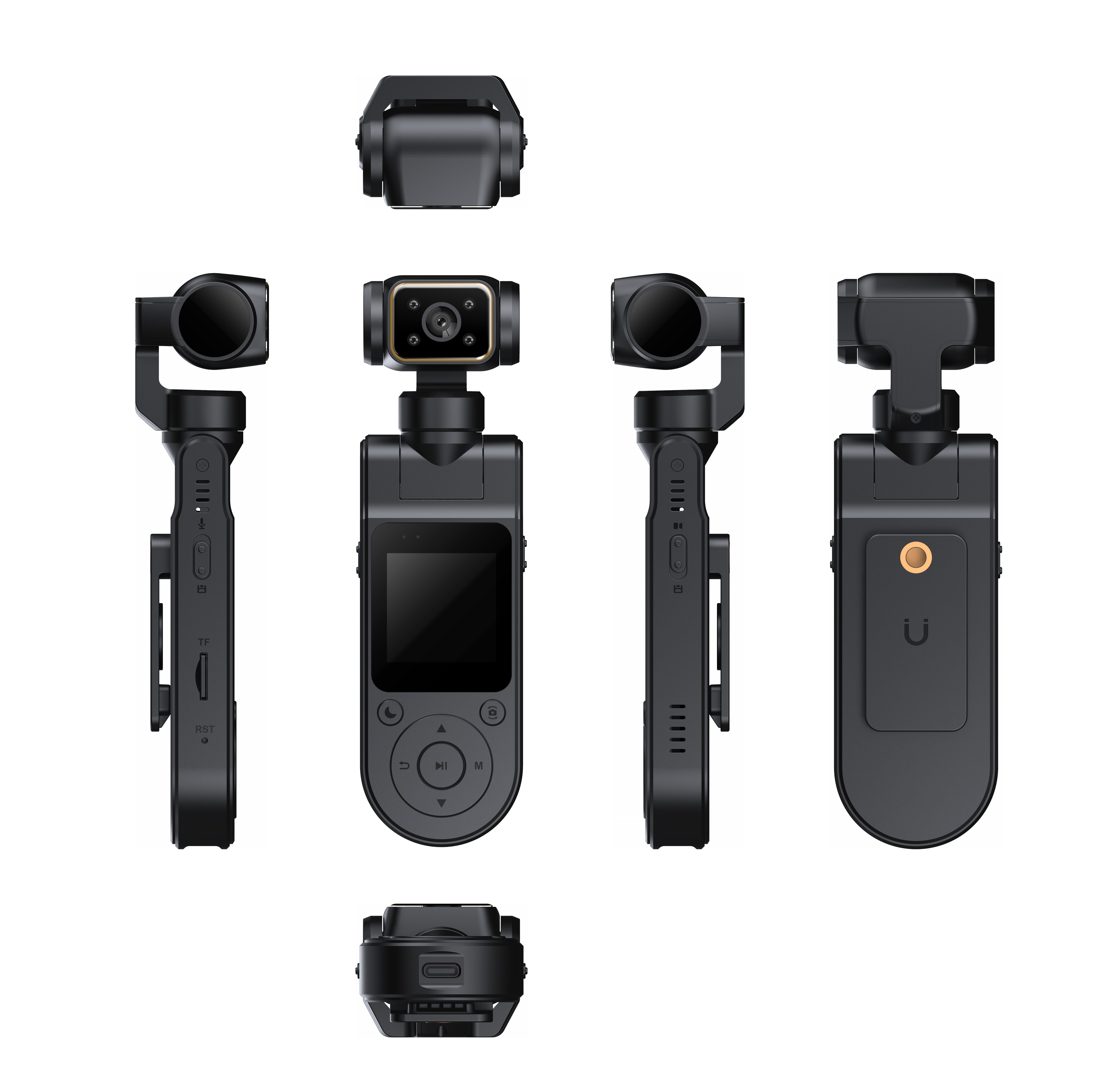
X20 is classified as 2K+WIFI with a 1.54-inch IPS screen and a documented video resolution of 1920×1080 in AVI format.
8. 4K and 2K resolution claims
Q1, Q2 and Q3 document front and rear 4K recording at 3840×2160, plus simultaneous dual recording at front 2K and rear 2K. Q2 additionally documents three selectable modes for simultaneous 2K+2K dual recording. X20 documents a video resolution of 1920×1080 in AVI format, while the model itself is classified as a 2K+WIFI camera.
That last point is the practical lesson for buyers. Model naming is a product classification, not a resolution certificate. Take the resolution from the model's own technical documentation and make sure the box, the manual and the marketplace listing repeat the same figure for the same model.
Ask your supplier:
- What resolution and frame rate are stated in the technical documentation for each recording mode?
- Do the packaging and listing copy repeat those exact figures?
- Which recording mode was active during any battery-runtime or temperature test?
One rule covers most of this section: for every claim you intend to publish, there should be one document that names the model, the tested configuration and the figure.
Regional Certification Paths: What to Ask for Each Target Market
YUAOHENG exports to more than 15 countries and regions, with Europe, North America, Asia and South America as its main markets. Regional requirements differ, but the questions a buyer must ask are structurally identical in every market. What changes is who answers them and which document they point to.
Europe
- Which safety documentation applies to the finished camera, and does it list the exact model?
- Which document covers electromagnetic compatibility, and was it issued for the assembled product?
- Which radio documentation covers the WiFi function, and is the tested module the one in production?
- Which material restriction documentation applies, and what is inside its scope?
- Which labelling and language requirements apply to the packaging and the manual?
YUAOHENG products have obtained CE and RoHS certifications. The buyer's task is to confirm that the model list and the scope inside those documents match the order.
North America
- Which equipment authorization covers the radio function, and is it held by the factory or the importer?
- Which safety documentation applies to a battery-powered consumer recording device?
- Which material declaration is required for the housing and the accessories in the box?
- Which channel-specific requirements apply if the product is sold through a particular retail or online platform?
YUAOHENG products have obtained FCC certification. Confirm the model list, and confirm who the responsible party for market access will be.
Asia
- Which countries in the region are in scope for the first order?
- Does each country require its own radio approval, or does it accept an international test report?
- Is a local representative or local-language labelling required?
- How is the model name rendered in local-language documentation, and does it still match the shipping model number?
South America
- Are both a telecom approval and a safety approval required for the WiFi model?
- Which importer holds the approvals, and can they be transferred if the importer changes?
- Must the documents be issued in the importing country rather than by an international laboratory?
- Does the shipment documentation list the model exactly as approved?
Global marketplaces and independent retail
- Which document does the platform accept as proof, and does it have to name the seller or the brand rather than the factory?
- Do the listing images and bullet points make claims that the documentation does not cover?
- Who updates the listing if a firmware or battery change affects a published claim?
Never accept a certificate file without a model list. If the model list does not contain the model you are ordering — X20, Q1, Q2 or Q3 — ask again.
Step-by-Step Breakdown: Building the Compliance File Before Production
- Lock the model list and the market list first. Decide which of X20, Q1, Q2 and Q3 you are ordering and which countries you are selling into before you discuss documents. Documentation is produced per model and per market, so an open-ended list becomes an open-ended project.
- Write down the trigger features for each model. Use the feature map in this guide: WiFi, battery, ABS housing, waterproof-case compatibility, USB 2.0 interface, infrared night vision, electronic image stabilization and 4K/2K recording claims.
- Request documents by feature, not by brand. Ask for the file that covers this feature on this model, rather than for "all certificates".
- Check three identifiers on every document: the model name, the tested configuration and the document version or date. If any of the three is missing or inconsistent, treat the document as unverified until it is corrected.
- Confirm who issued the document and who can answer questions about it. A document you cannot question is a document you cannot rely on when a customs officer or a platform reviewer asks for clarification.
- Align packaging, manual and listing copy with the documented figures before printing. Changing a claim after the artwork is printed costs more than changing it before.
- Set up a change-control rule. Any change to the radio module, battery cell, housing material, firmware affecting resolution or stabilization, or the accessories in the box should trigger a documented review of whether the existing documents still apply.
- Keep a batch record. Link each shipped batch to the document version that applied when it was produced, so a later question can be answered with evidence rather than memory.
Use Cases: Where the Compliance Question Becomes a Commercial Risk
Underwater and diving use
For diving and snorkelling applications, the documentation question is fundamentally about configuration. Q1 and Q2 are documented as compatible with a waterproof case for waterproof shooting, so the purchase specification must state whether the SKU includes the case, and any water-related marketing claim must match the configuration that was tested.
Bicycle and motorcycle mounting
Mounting and vibration resistance are accessory questions. The camera documentation covers the camera; the bracket is a separate item with its own material composition and potentially its own testing requirement. Buyers assembling a bicycle-mounted kit should list every item in the box and confirm which items carry documents.
Skiing and cold-weather outdoor use
Cold-weather use puts the battery specification in the foreground, and it shows why runtime claims must name a mode. X20 is documented at approximately 6–7 hours of video working time and approximately 9 hours of recording working time, with a maximum photo duration of approximately 12 hours at 720p 30fps. Q1 is documented at approximately 4–5 hours of video working time, approximately 9 hours of recording working time and a maximum photo duration of approximately 10 hours at 720p 30fps. Any runtime figure on packaging should state which mode it refers to.
Vlog and handheld use
Touch-screen operation on Q2 and 4K recording on Q1, Q2 and Q3 are the features most visible to end users, and therefore the ones most likely to appear in a marketplace listing. The same rule applies here as everywhere else: the listing repeats the documented figure, not an aspirational one.
Low-light and night recording
Infrared night vision is documented across all four models, with manual switching. If packaging or advertising promises performance in darkness, the buyer should ask which document supports that promise.
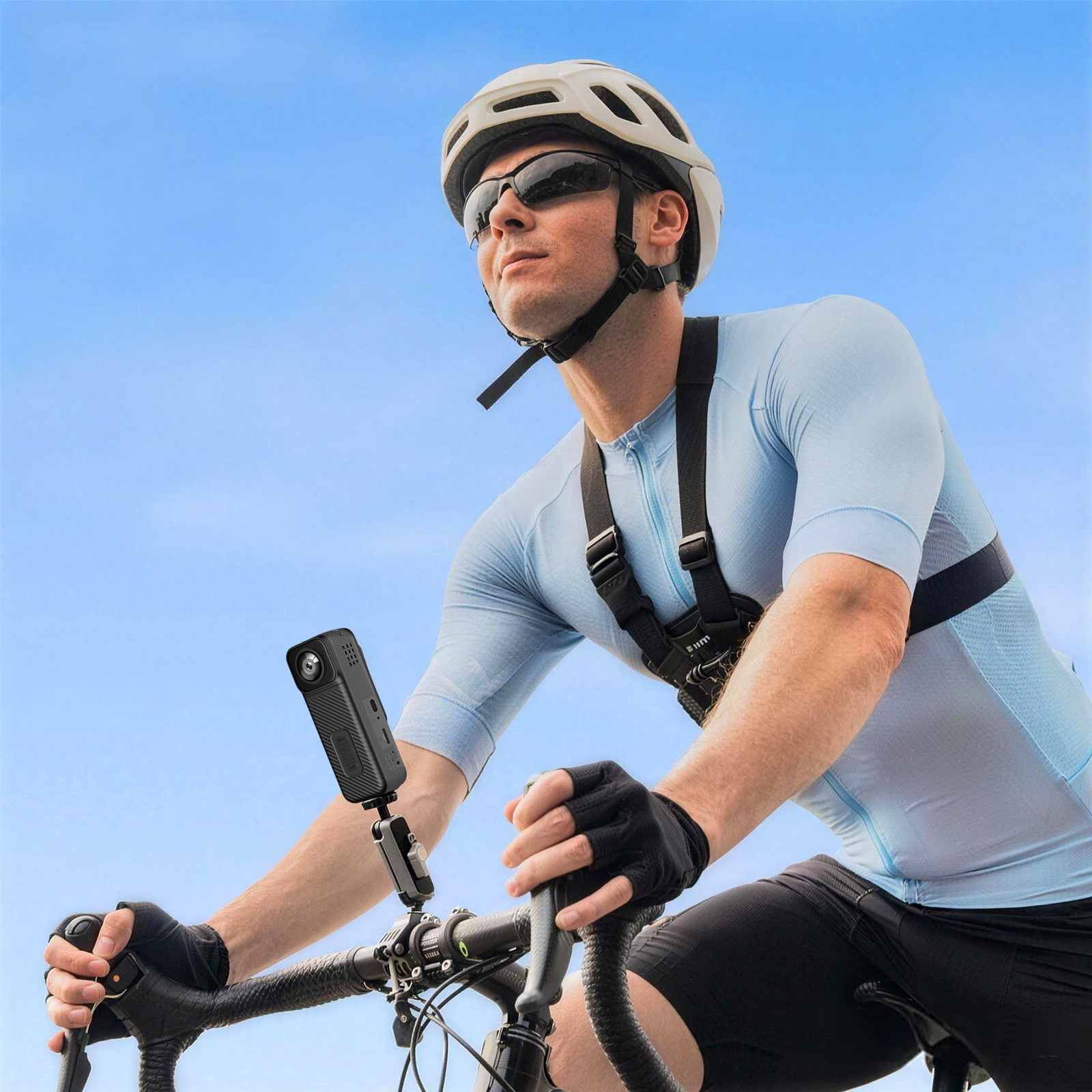
Accessory kits add compliance items: the camera, the mount and the waterproof case may each require their own documentation.
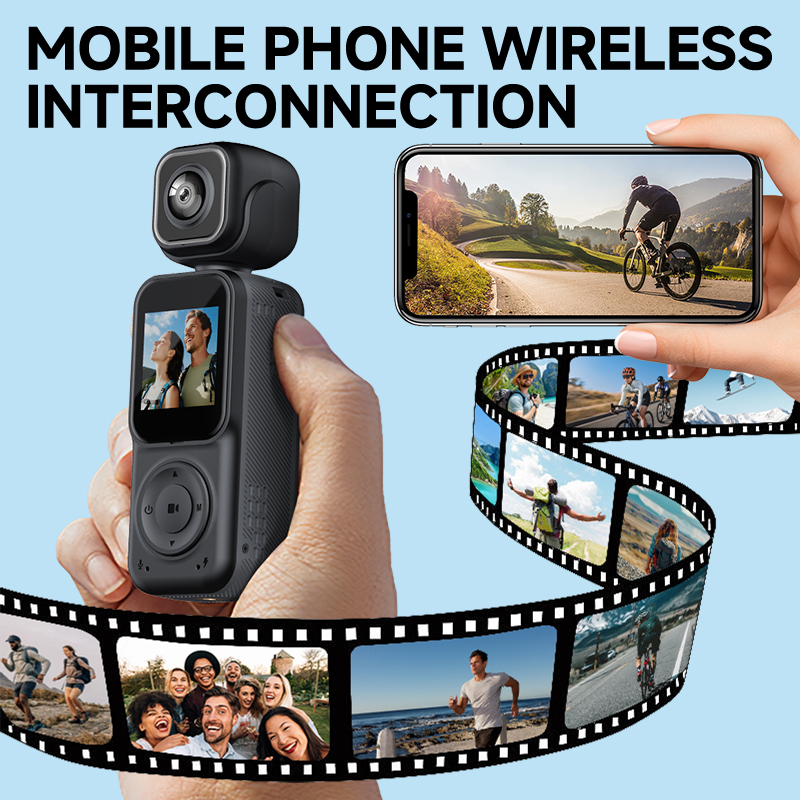
The documented specification sheet is the reference point that packaging, manual and listing copy should all repeat.
Comparison Table: X20, Q1, Q2 & Q3 at a Glance
| Model | Product class | Display | Recording (documented) | Battery | Compliance-relevant features | Documents to request first |
|---|---|---|---|---|---|---|
| X20 | 2K+WIFI X20 | 1.54-inch IPS, 320×240 | 1920×1080 in AVI format | 1000mAh/3.8V polymer | WiFi, infrared night vision (four built-in energy-saving infrared lights, manual regulation), Mini USB 2.0, Micro Type-C input DC 5V 1A–2A, ABS | Radio document, battery document, material declaration |
| Q1 | 4K+WiFi Q1 | 1.5-inch IPS, 320×240 | Front 4K 3840×2160; rear 4K 3840×2160; simultaneous front 2K + rear 2K | 2000mAh/3.8V polymer | WiFi, waterproof-case compatibility, infrared night vision, Mini USB 2.0, ABS | Radio document, battery document, water-ingress configuration statement, material declaration |
| Q2 | 4K WiFi touch screen anti-shake | 1.8-inch IPS, 800×480 | Front 4K 3840×2160; rear 4K 3840×2160; simultaneous 2K+2K with three modes optional | 18650, 2000mA | WiFi, 6-level electronic image stabilization, touch plus physical dual buttons, waterproof-case compatibility, infrared night vision, Mini USB 2.0, ABS | Radio document, battery document, firmware version record, water-ingress configuration statement, material declaration |
| Q3 | 4K WIFI Q3 | 1.5-inch IPS, 320×240 | Front 4K 3840×2160; rear 4K 3840×2160; simultaneous front 2K + rear 2K | 2000mAh/3.8V polymer | WiFi, infrared night vision (manual regulation), Mini USB 2.0, ABS | Radio document, battery document, material declaration |
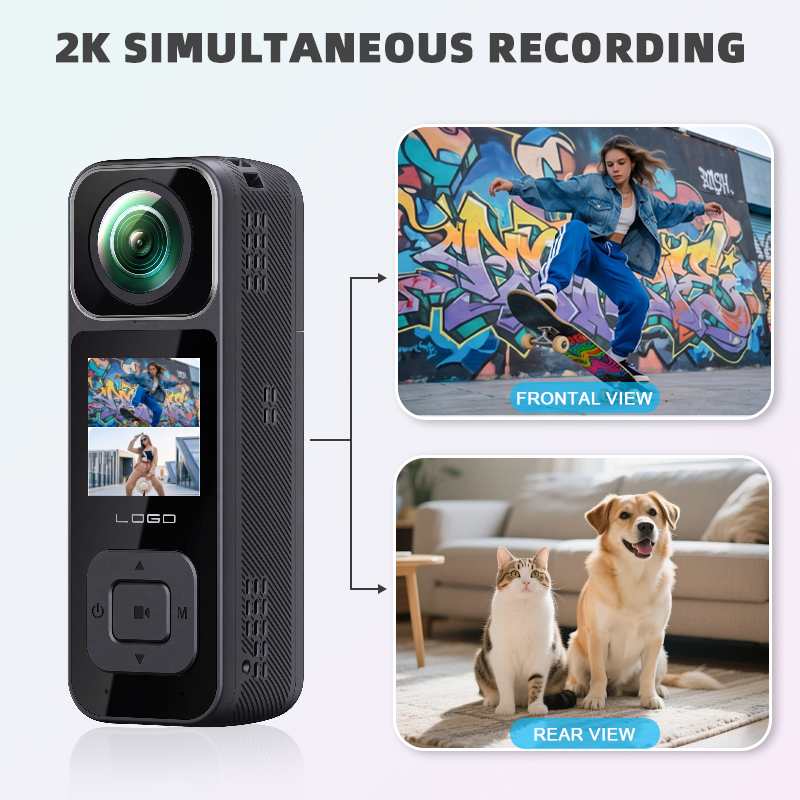
Q2: 4K WiFi touch screen anti-shake model with 6-level electronic image stabilization and an 18650 2000mA battery.
Frequently Asked Questions
Are YUAOHENG action cameras already certified for export markets?
YUAOHENG products have obtained FCC, CE and RoHS certifications, and the company exports to more than 15 countries and regions, serving Europe, North America, Asia and South America. Those certifications cover the scopes they were issued for; they are not a universal passport for every market or every model. For any market outside those scopes, ask which regional approvals apply to the exact model you are ordering — X20, Q1, Q2 or Q3 — and request a document that names that model, the tested configuration and the document version.
Can documentation be issued per model instead of as one general company file?
YUAOHENG provides OEM and ODM one-stop customization services covering product design, engineering development, testing and mass production, and operates a standardized production facility with professional production lines and strict quality control. A 30-engineer R&D team supports product upgrades and customized development, which is also how model-level documentation is maintained. Buyers should still request the document set per model, because the compliance-relevant features differ: X20 is a 2K+WIFI model with a 1000mAh/3.8V polymer battery, Q2 is a 4K WiFi touch screen anti-shake model with 6-level electronic image stabilization and an 18650 2000mA battery, and Q3 is a 4K WIFI model with a 2000mAh/3.8V polymer battery.
What drives the cost of compliance documentation on an action camera order?
The main cost drivers are the number of models in scope, the number of target markets, and whether a change requires new testing — a different radio module, a different battery cell, a different housing material, or a firmware change that affects a published claim. Finalizing the model list and the market list before testing begins generally reduces the number of test rounds, because documentation is produced per model and per market rather than per unit.
Can I validate a sample before committing to a full documentation file?
Yes. A sample unit is the practical way to confirm that the production configuration matches the documented one. When a YUAOHENG sample arrives, check the documented facts against the physical unit: the ABS housing, the 1.5-inch IPS screen on Q1 and Q3, the 1.8-inch IPS screen on Q2, the 1.54-inch IPS screen on X20, the battery type and capacity, the high-speed Mini USB 2.0 interface, and whether the features you intend to advertise — WiFi, infrared night vision, electronic image stabilization on Q2 and 4K recording on Q1, Q2 and Q3 — behave as documented.
What production capacity and lead time should I plan for?
YUAOHENG operates a 1,500 square meter manufacturing facility with approximately 300 employees and an annual production capacity of about 2,000,000 units, supported by an R&D team of 30 engineers. Actual lead time depends on the model mix, the customization scope and the documentation requirements of your target markets, so it should be confirmed against your specific order rather than assumed. To request the model-level document set, a quotation or a sample of X20, Q1, Q2 or Q3, contact YUAOHENG at info@yuaoheng.com or +86 18098279385 (phone and WhatsApp), or download the product catalog using the link below.
Conclusion: Compliance Is a Document Set, Not a Logo
For X20, Q1, Q2 and Q3, compliance is not decided by a logo on a datasheet. It is decided by whether each feature — WiFi, a 1000mAh/3.8V or 18650 2000mA battery, an ABS housing, waterproof-case compatibility, a Mini USB 2.0 interface, infrared night vision, 6-level electronic image stabilization on Q2, and the 4K or 1080p recording figure printed on the box — is traceable to one document that names the model, the tested configuration and the version.
Build the file before production, in this order: lock the models and markets, list the trigger features, request documents by feature, verify the three identifiers, align the packaging claims, and set a change-control rule. Regional paths differ, but the questions do not. A buyer who asks those questions early gets a ship-ready file; a buyer who asks them at the port gets a delay.
Next Step: Request the Model-Level File or a Sample
YUAOHENG provides OEM and ODM one-stop customization services covering product design, engineering development, testing and mass production, supported by a standardized production facility with professional production lines and strict quality control. To start a compliance documentation review for X20, Q1, Q2 or Q3 — or to request a sample and a quotation — contact us directly.
Email: info@yuaoheng.com | Tel / WhatsApp: +86 18098279385 | Website: www.yuaoheng.com
Product catalog (PDF, free download): download the YUAOHENG product catalog
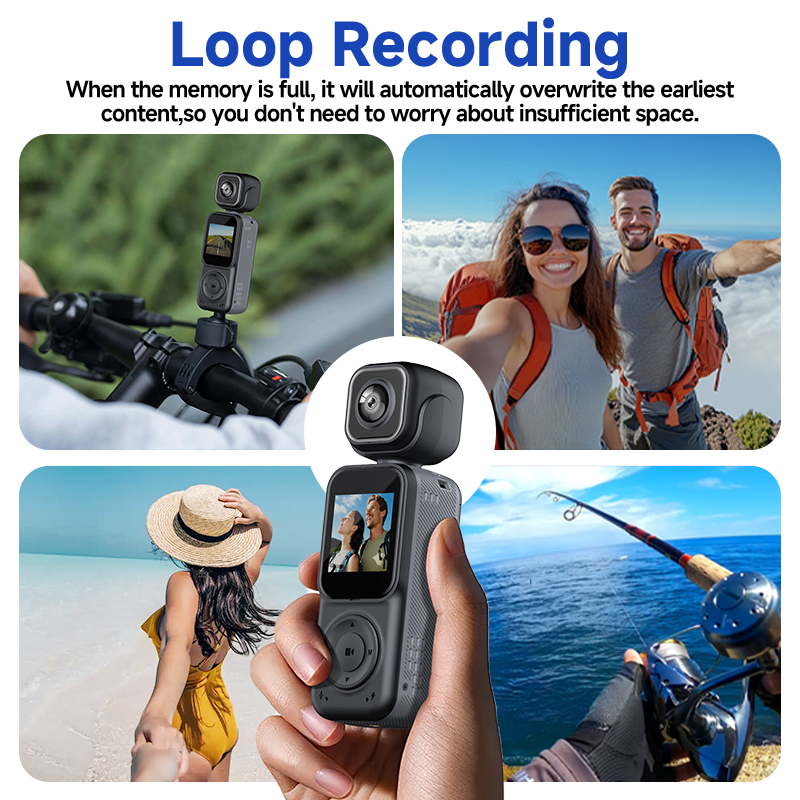
OEM and ODM programs: request the model-level document set before tooling and mass production begin.
Have Questions or Need More Details?
Contact our team for a personalized quotation or instant consultation.
Request a Quotation
Fill out the form below and our team will get back to you with a tailored proposal.
WhatsApp Direct Chat
Prefer to chat in real-time? Message us on WhatsApp for instant assistance & quick answers.
- Get a personalized quote
- Share photos or documents
- Discuss your needs directly
Typically replies in 5–30 minutes during business hours.