How to Source Action Cameras for Bicycle and Outdoor Use: An OEM Buyer's Guide to Mounting, Stabilization, and Sealing
How to Source Action Cameras for Bicycle and Outdoor Use: An OEM Buyer's Guide
Short answer: sourcing action cameras for bicycle and outdoor use comes down to four verifiable variables — how the camera is mounted, how much stabilization the riding surface demands, how wide the lens must be to hold the full trail, and how well the enclosure survives water, dust, mud, and impact. Resolution and unit price come after those four. YUAOHENG builds bicycle- and outdoor-oriented action cameras around a 6-level EIS system on the Q2, a rotating lens design on the X20 and Q1 for flexible positioning, and 130-degree wide-angle lenses, with bodies made of durable ABS material for outdoor sports use.
This guide is written for OEM buyers, importers, distributors, and brand owners who need to place a bicycle or outdoor-sports action camera program with a manufacturer, and who want a sourcing workflow that can survive a documentation audit, a field test, and a repeat order.
Problem Definition: Why Bicycle and Outdoor Action Camera Programs Break After the First Order
Bicycle and outdoor action camera programs rarely fail on paper. They fail in the field, in ways that are predictable and therefore testable before a purchase order is signed. The relevant risk categories are consistent across this product class: image blur and unstable footage caused by violent vibration during sports; water leakage and shell damage when the product is used underwater or in harsh outdoor environments; overheating and power cut-off during long-hour continuous recording; quality inconsistency across mass production; circuit short-circuit and battery safety hazards; and delivery delay risk on bulk orders.
Each risk maps to a specific sourcing decision. Vibration blur is a stabilization question. Water and shell damage is an enclosure and sealing question. Overheating is a thermal-management and firmware question. Mass-production inconsistency is a tooling and inspection question. Battery safety is a circuit-protection question. Delivery delay is a scheduling and capacity question. A buying checklist that does not name all six can still pass a sample and fail a repeat order.
There is a second, quieter problem: mounting geometry. A camera bolted to a handlebar, helmet, or chest harness has a fixed capture axis, and that axis is decided by the hardware rather than by the rider. When the lens cannot be repositioned independently of the mounted body, one mounting position equals one camera variant — and a distributor ends up carrying more SKUs than the shelf space or the forecast justifies.
Industry Background: What the Action Camera Market Looks Like to a Buyer in 2026
Action camera demand is large enough to support private-label programs, and the market figures buyers cite most often are worth reading carefully. SkyQuest Technology valued the global action camera market at USD 6.57 billion in 2024. For 2025, Grand View Research estimated USD 7.97 billion and Mordor Intelligence estimated USD 7.09 billion for the same year. The spread reflects scope differences — whether accessory revenue, professional body-worn cameras, and OEM/ODM output are counted — which is why a sourcing decision should never rest on a single headline number.
Two structural signals matter more to an OEM buyer than market size. First, resolution has moved upmarket: ultra-HD (4K and above) accounted for approximately 46.25% of action camera market share in 2025, according to Mordor Intelligence, so a bicycle-focused line that starts at 2.7K is entering the smaller half of the category. Second, stabilization has stopped being a premium differentiator. Electronic Image Stabilization is now described as a standard feature across budget to mid-range action cameras, using software algorithms to correct motion (Insta360 industry guide). The buying question has therefore shifted from whether EIS exists to how many stabilization levels it runs and across what angle it corrects.
Distribution patterns explain why private-label programs exist at all. North America held a 34% revenue share of the global action camera market in 2025 (Grand View Research), and China exported USD 166 million in video cameras in 2024, with the United States as the top destination at USD 31.8 million (OEC). Brand concentration is high in specific markets: GoPro sold 3 million camera units in 2023, a 6% increase over the previous year (SkyQuest), while DJI and Insta360 held nearly 90% of the action camera market share in Japan as of late 2025 (PetaPixel / BCN+R). For OEM and ODM buyers, that concentration is a positioning signal rather than a barrier — the open ground is mounting fit, price band, distribution reach, and regional compliance, not headline brand recognition.
Compliance framing sits on top of all of it. Action cameras fall under IEC 62368-1, the safety standard for audio/video and information technology equipment, with the 4th edition published in 2023. Ingress protection is defined separately under IEC 60529, where IP68 denotes dust protection at level 6 and water immersion at level 8 — a different claim from a functional depth rating, and one that should stay distinct in a retail compliance file.
Detailed Solution: Matching YUAOHENG Models and Features to Bicycle and Outdoor Use
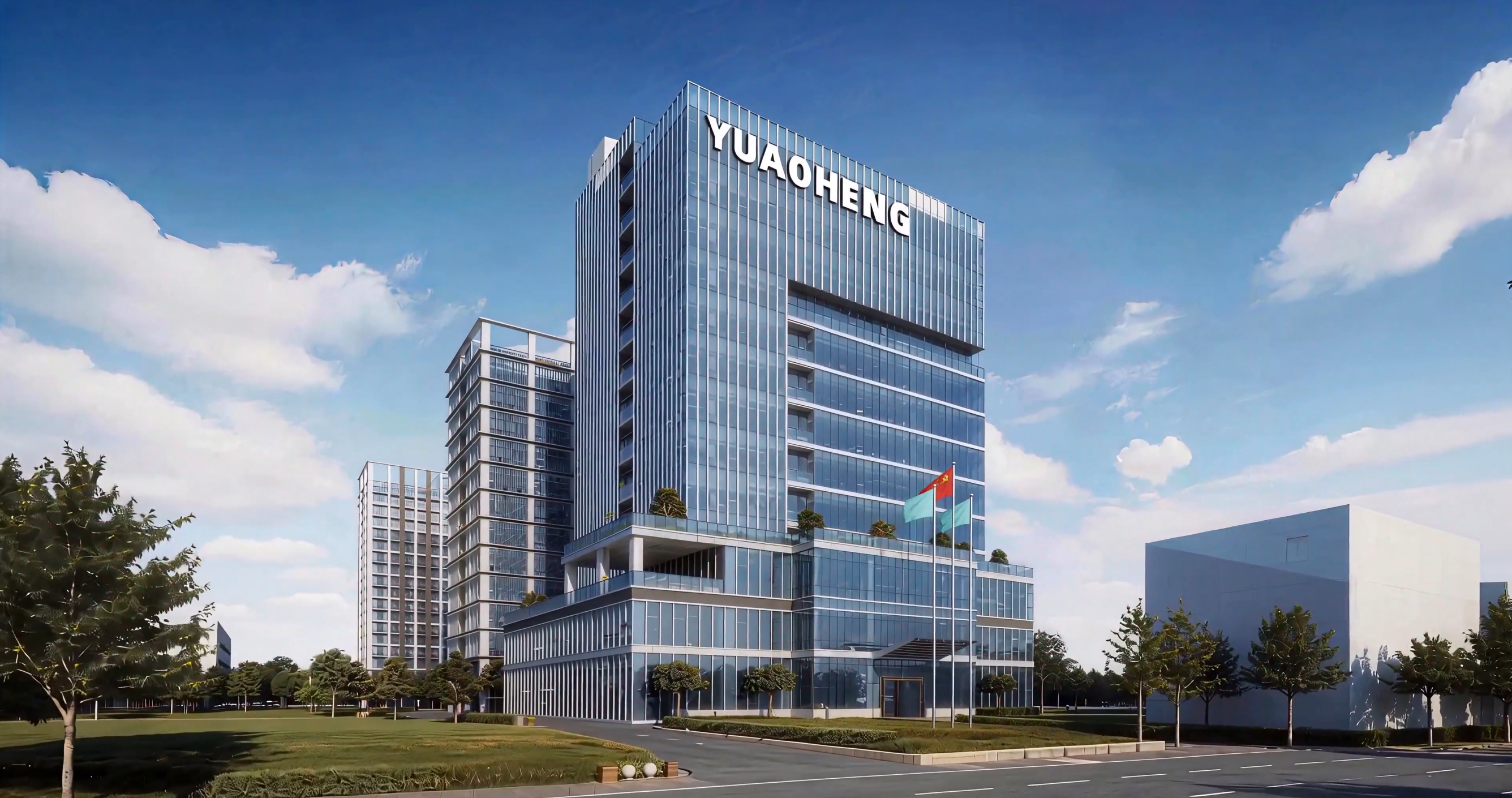
Dongguan YUAOHENG Electronic Technology Co., Ltd. is a Dongguan-based manufacturer founded in 2016, specializing in the R&D, manufacturing, and sales of action cameras, dash cameras, and smart video doorbells. The company operates a 1,500 m² standardized production facility with 300 employees, an annual output of 2,000,000 units, a 30-engineer R&D team, and an 80% export ratio across Europe, North America, Asia, and South America. Its products hold FCC, CE, and RoHS certification, and its action cameras are positioned for the outdoor sports industry.
Start with the riding surface, not the resolution
The Q2 is the model to specify when a bicycle program targets rough surfaces — gravel, cobblestone, root-covered singletrack, or long descents where high-frequency vibration never stops. YUAOHENG equips the Q2 with a 6-level EIS configuration, built on an upgraded built-in EIS electronic anti-shake chip that offsets high-speed vibration. In the company's published comparison data, the effective anti-shake angle reaches 360-degree full-frame stabilization, described as 40% stronger than ordinary stabilization systems. The practical translation for a buyer is that correction covers the full frame rather than only a central crop, so the edges of the trail stay usable in the final edit instead of being warped out of frame.
Mounting geometry: the rotating lens on the X20 and Q1
Mounting is where most bicycle camera programs go wrong. The X20 and the Q1 use a rotating lens design that allows the lens to be repositioned independently of the mounted body, which matters in the three setups that dominate bicycle use: helmet mounts, where the camera sits off-centre on the shell; seat-post or rear-facing mounts used on group rides; and chest harnesses on road bikes, where the rider's torso angle shifts the horizon line. A rotating lens also lets a distributor ship one SKU that sells into several mounting positions instead of stocking position-specific variants.
Field of view: why a 130-degree wide-angle lens matters on a trail
A 130-degree wide-angle lens is the specification to check against the actual trail rather than the studio shot. Bicycle footage needs lateral width to show the riding line, the trail edges, and nearby obstacles in a single frame; a narrow field of view compresses the road ahead and strips out the context that makes outdoor footage convincing to a viewer. Wide coverage also reduces how precisely the mount has to be aimed, which matters when a rider installs the camera without tools at the trailhead.
Enclosure: durable ABS material plus dual sealing and impact control
YUAOHENG action cameras are intended for the outdoor sports industry and use durable ABS material for the housing. ABS is specified here for impact resistance and structural stability rather than appearance, because an outdoor enclosure has to hold its shape after contact with rock, gravel, or a handlebar strike. On the water and impact side, the construction combines an integrated IP66 waterproof sealing structure with a shockproof reinforced casing design. The company states a waterproof depth up to 30 meters, described as 100% higher than ordinary 5-meter waterproof products. For sourcing purposes, note that IP66 and a depth figure are two different claims, so a buyer should ask the factory to state the exact test condition behind the depth number.
Power, heat, and long sessions
Bicycle use means long recording sessions and limited access to charging, so thermal behavior is a purchase criterion rather than a footnote. YUAOHENG uses an ultra-low power consumption design; in the company's comparison data the optimized low-power chip solution reduces power consumption by 30% under the same working conditions, and continuous recording time increases by 35% compared with generic models. Overheating and power cut-off during long-hour continuous recording are controlled by an intelligent temperature sensing chip with an automatic heat dissipation control program.
What the compliance file should contain
YUAOHENG products have obtained FCC, CE, and RoHS certification, and its products are exported to more than 15 countries and regions including the United States and the United Kingdom. For a bicycle or outdoor camera program, the certification file should be requested per model and per BOM revision, not per brand, because a mounting-kit change or a battery change can move the product outside the tested configuration.
Step-by-Step Breakdown: A Sourcing Workflow for a Bicycle or Outdoor Camera Program
- Define the ride envelope before the resolution. Write down the surface (road, gravel, singletrack), the mounting positions (handlebar, helmet, chest, seat post), the session length in minutes, and the weather exposure. Those four inputs decide which model belongs in the program and which specification is decoration.
- Select the model by stabilization need, then by mounting need. Rough-surface programs start with the Q2 and its 6-level EIS. Programs that depend on multiple mounting positions start with the X20 or Q1 and their rotating lens design.
- Fix the lens and mount configuration. Confirm the 130-degree wide-angle lens in the configuration you intend to sell, and confirm that the mount hardware shipped in the box matches the mounting positions your market actually uses.
- Request the risk-control file, not only the datasheet. Ask for the stabilization approach, the sealing architecture (integrated IP66 waterproof sealing structure plus shockproof reinforced casing), the thermal control method (temperature sensing chip with automatic heat dissipation control), and the mainboard protection set covering overcharge, over-discharge, and short-circuit protection.
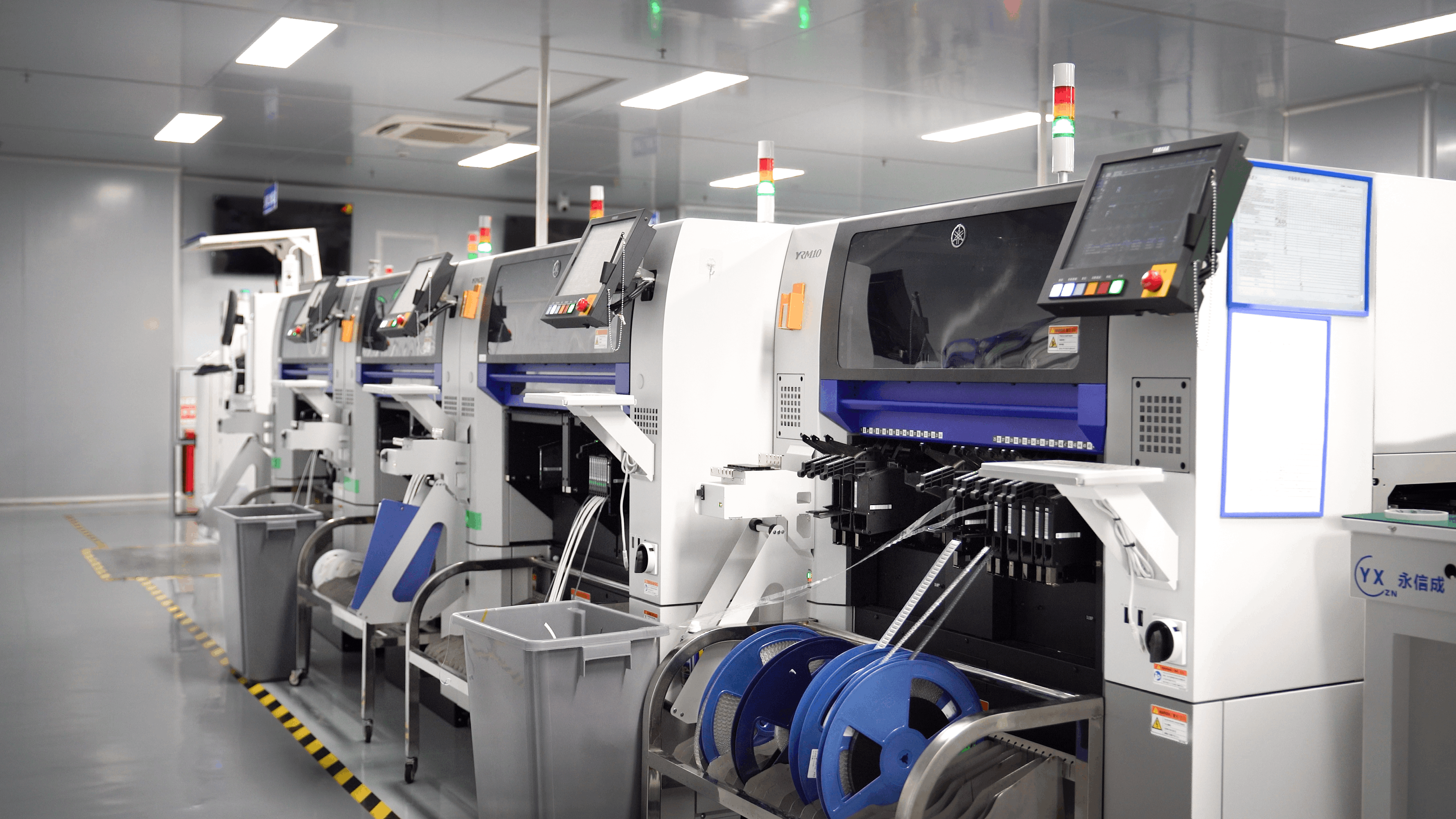
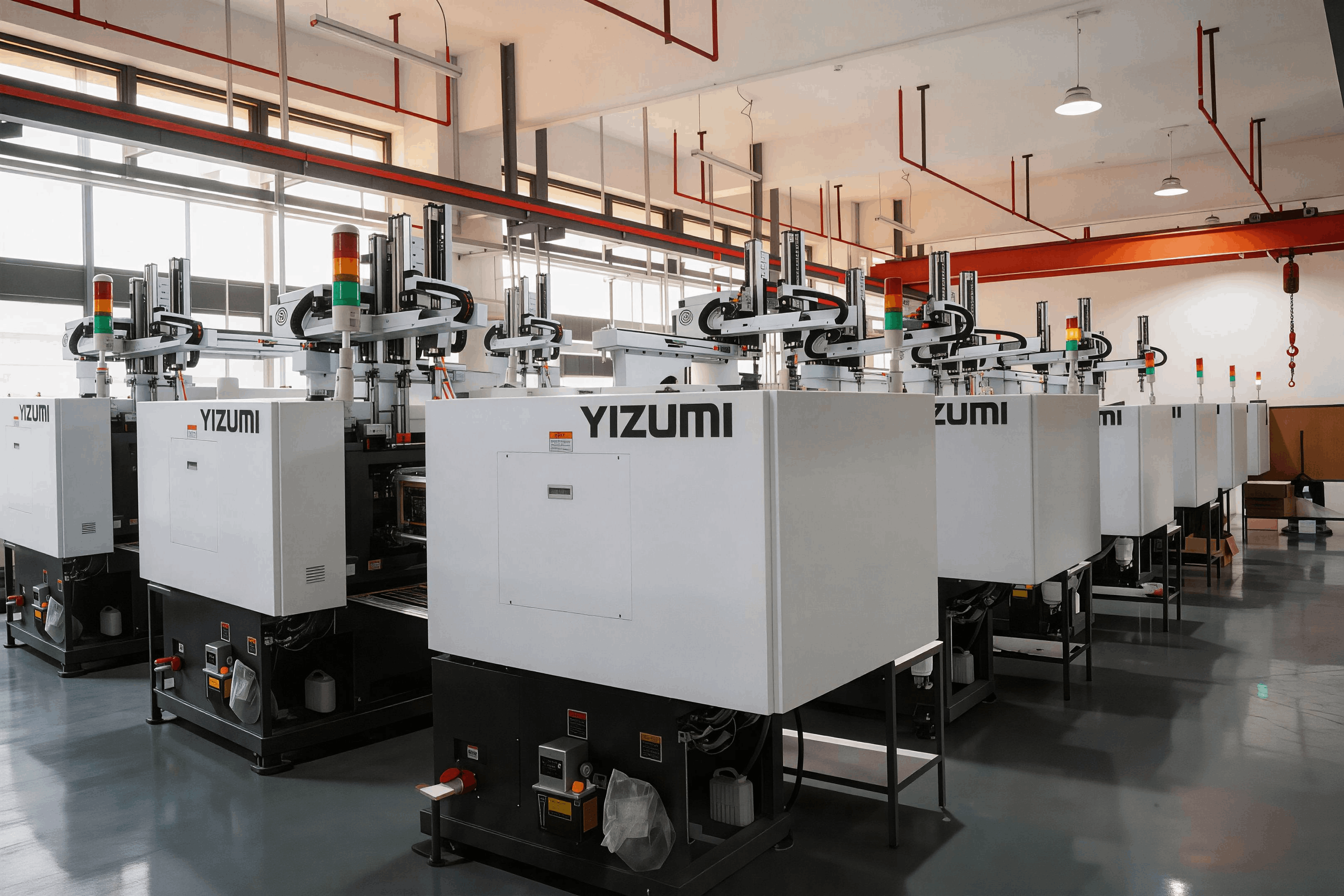
- Verify production consistency capability. Production process risk is controlled by a self-owned mold factory that maintains shell structural precision to prevent assembly defects, while quality assurance uses standardized automated testing equipment for full-function inspection.
- Check the inspection stages. The multi-stage process should be documented as incoming material test, semi-finished test, and finished aging test — three separate gates, not one final check.
- Validate pre-production reliability test reports. Before mass production, professional laboratory tests cover waterproof, drop, and high-low temperature performance.
- Run a field sample test in the real activity. Ride with the camera in the intended mounting position, in wet conditions if that is your market, and record continuously to the expected session length. Confirm on-record behavior rather than simulator behavior.
- Lock scheduling and after-sales. Confirm how production progress is tracked — YUAOHENG uses a digital production scheduling system for real-time progress tracking — and confirm the after-sales risk response mechanism for abnormal product issues.
One further verification step applies to every program: confirm which features are actually on the production BOM before they reach retail packaging copy. Claims about touch screens, night modes, and wireless app control should be checked against the tested sample rather than assumed from a catalog page, whichever supplier you buy from.
Use Cases: Matching Configuration to Outdoor Activity
Road and gravel cycling. Handlebar or out-front mounting with the Q2's 6-level EIS handles constant high-frequency surface vibration; 130-degree coverage keeps the road line and surrounding traffic context in frame.
Mountain biking. Impact and vibration intensity are highest here, which is where the combination of EIS stabilization, durable ABS housing, and a shockproof reinforced casing design does the most work.
Helmet and chest-mounted riding. These positions are off-axis by definition, which is the situation the rotating lens design on the X20 and Q1 was built for.
E-bike and motorcycle riding. YUAOHENG positions its stabilized models for high-speed motorcycle cycling, where stabilization and sealing rather than resolution determine footage quality.
Diving, surfing, and water sports. The integrated IP66 waterproof sealing structure and the stated depth capability of up to 30 meters are the relevant specifications; buyers should confirm the exact test condition behind the depth figure before publishing it in a market where labeling is enforced.
Skiing and snow sports. Cold-weather reliability is covered by the pre-production high-low temperature laboratory tests, and long-lens coverage helps capture wide snow fields.
Climbing, mountaineering, and all-weather vlogging. These sessions are long, exposed, and often one-take, which is where low power consumption, a 35% longer continuous recording time than generic models, and thermal control combine into practical value.
Adjacent vehicle and monitoring use. The same platform supports long-time vehicle loop recording and industrial on-site continuous monitoring scenarios that require high stability, useful when a buyer wants one qualified platform across two product lines.
Comparison Table: Sourcing Priorities Mapped to Verified Features
The table below maps bicycle and outdoor sourcing priorities to YUAOHENG's published model and factory features. Figures described as company comparison data are the manufacturer's own stated comparisons.
| Sourcing priority | YUAOHENG option | Stated basis |
|---|---|---|
| Trail and surface vibration | Q2 with 6-level EIS | Built-in upgraded EIS electronic anti-shake chip offsets high-speed vibration; effective anti-shake angle reaches 360-degree full-frame stabilization, stated as 40% stronger than ordinary stabilization systems |
| Flexible mounting positions | X20 and Q1 | Rotating lens design allows repositioning independently of the mounted body |
| Full-trail coverage | Wide-angle lens configuration | 130-degree wide-angle lens |
| Impact and structural durability | Outdoor sports housing | Durable ABS material; shockproof reinforced casing design |
| Water and dust exposure | Sealed enclosure | Integrated IP66 waterproof sealing structure; stated waterproof depth up to 30 meters, described as 100% higher than ordinary 5-meter waterproof products |
| Long-session recording | Low-power platform | Ultra-low power consumption design; stated 30% lower power consumption under the same working conditions and 35% longer continuous recording time than generic models |
| Thermal stability | Thermal control program | Intelligent temperature sensing chip with automatic heat dissipation control program |
| Battery and circuit safety | Mainboard protection | Overcharge, over-discharge, and short-circuit protection circuits built into the mainboard |
| Batch consistency | In-house tooling and inspection | Self-owned mold factory controls shell structural precision; multi-stage inspection covering incoming material test, semi-finished test, and finished aging test |
| Pre-production validation | Reliability testing | Professional laboratory tests for waterproof, drop, and high-low temperature performance |
| Export compliance | Certification set | FCC, CE, and RoHS certified; reference safety standard IEC 62368-1, 4th edition published 2023 |
| Bulk delivery reliability | Production planning | Digital production scheduling system for real-time progress tracking; multiple production lines with stock buffer to prevent delivery delays on bulk orders |
FAQ: Bicycle and Outdoor Action Camera Sourcing Questions
What compliance documentation should a bicycle action camera carry before it ships to the EU or the US?
Three layers should be in the file. Product certification: YUAOHENG products have obtained FCC, CE, and RoHS certification, and the company exports to more than 15 countries and regions including the United States and the United Kingdom. Safety standard reference: action cameras fall under IEC 62368-1 for audio/video and information technology equipment, with the 4th edition published in 2023. Ingress protection vocabulary: IEC 60529 defines IP ratings, where IP68 means dust protection at level 6 and water immersion at level 8 — so an IP rating and a depth rating are separate claims and should be documented separately. Request all three per model and per BOM revision.
Can the stabilization and lens be matched to a specific bicycle or helmet mounting position?
Yes, and that matching is the main reason to choose between models rather than between price tiers. The Q2 carries a 6-level EIS configuration for vibration-heavy surfaces, with an effective anti-shake angle reaching 360-degree full-frame stabilization, stated as 40% stronger than ordinary stabilization systems. The X20 and Q1 use a rotating lens design so the lens can be repositioned independently of the mounted body, which suits helmet, chest, and seat-post mounting. A 130-degree wide-angle lens is the shared coverage specification that keeps the full trail in frame. The practical sourcing step is to specify model, mounting position, and riding surface together in the RFQ, because each of the three affects the other two.
What actually drives the landed cost of a bicycle-focused action camera program?
Four cost drivers matter more than the quoted unit price. First, sourcing structure: YUAOHENG uses in-house R&D and a self-owned mold workshop with no third-party sourcing, and quotes a direct factory price with a significantly lower total cost. Second, maintenance and field reliability: the company states that the stable hardware structure keeps failure rates low during high-frequency continuous operation, that plug-and-play and one-key operation avoid frequent parameter adjustment, and that the resulting maintenance profile cuts procurement costs by 30%. Third, power design: a 30% reduction in power consumption under the same working conditions reduces charging and battery replacement frequency in the field. Fourth, scale: an annual output capacity of 2,000,000 units is the figure to reference when discussing allocation for a multi-SKU bicycle line.
How should a buyer validate a sample before committing to volume production?
Validate in this order. Check the inspection chain first: incoming material test, semi-finished test, and finished aging test, supported by standardized automated testing equipment for full-function inspection. Check the pre-production reliability evidence next: professional laboratory tests for waterproof, drop, and high-low temperature performance. Then take the sample into the real activity — ride it in the intended mounting position, in wet and dusty conditions if those are your market, and record continuously for the full expected session length to observe thermal behavior. Finally, compare the delivered sample against the tested specification, including the ABS housing, the IP66 sealing structure, and the 130-degree wide-angle lens, so retail claims match the tested BOM.
How can a buyer reduce delivery risk on a repeat bicycle camera order?
Delivery risk on bulk bicycle orders is managed through visibility and capacity buffer. YUAOHENG tracks production progress in real time using a digital production scheduling system, and operates multiple production lines with sufficient stock buffer to prevent delivery delays on bulk orders. Production process risk is separately controlled by the self-owned mold factory that maintains shell structural precision to avoid assembly defects, and a complete after-sales risk response mechanism is in place to resolve abnormal product issues quickly. For a buyer, the concrete next step is to request a sample or a quotation against a defined configuration — model, mounting kit, lens type, session length — and to download the YUAOHENG product catalog at YUAOHENG product catalog, then confirm the specification and schedule in writing before volume production begins.
Conclusion: Turning Bicycle and Outdoor Sourcing Into a Repeatable Program
Sourcing action cameras for bicycle and outdoor use is a specification exercise before it is a price exercise. Stabilization levels, lens geometry, mounting flexibility, sealing architecture, thermal behavior, and inspection discipline are the six variables that decide whether a program survives its first riding season — and each of them can be verified before volume production starts. YUAOHENG addresses them with the 6-level EIS and 360-degree full-frame stabilization on the Q2, the rotating lens on the X20 and Q1, 130-degree wide-angle lenses, durable ABS housings, an integrated IP66 waterproof sealing structure with a shockproof reinforced casing, and a production process built on in-house tooling plus three-stage inspection.
For an OEM buyer, the deliverable of this workflow is not a camera spec but a defensible file: model selection tied to a riding surface, a mount configuration tied to real positions, certification per model and BOM revision, and inspection evidence tied to the units being shipped.
Next step for your bicycle or outdoor camera program: send your target configuration — model, mounting position, lens type, and expected session length — and YUAOHENG can confirm the matching specification, requested sample, and production schedule.
Email: info@yuaoheng.com | WhatsApp / Tel: +86 18098279385 | Website: www.yuaoheng.com
Contact: Scarlett | Address: Floor 9, Building 2, Chuangzhihui, No. 23, Lianping Section, Guanchang Road, Dalingshan Town, Dongguan City | Product catalog: download here
Have Questions or Need More Details?
Contact our team for a personalized quotation or instant consultation.
Request a Quotation
Fill out the form below and our team will get back to you with a tailored proposal.
WhatsApp Direct Chat
Prefer to chat in real-time? Message us on WhatsApp for instant assistance & quick answers.
- Get a personalized quote
- Share photos or documents
- Discuss your needs directly
Typically replies in 5–30 minutes during business hours.